How the two world wars began, why the great powers have not fought since, and how the 2026 risk map compares
No third world war is under way, and it is not the likeliest outcome. But in late 2026 two hot wars involve great powers, drones stray over NATO's eastern edge, and no treaty limits the American and Russian nuclear arsenals. The restraints that held for eighty years are thinner than they were.
This story is still unfolding. It is written from what was public up to 27 November 2026. As events move we publish a new version and mark what changed.
Add whether Congress funds the government, and the war, by 12 December
Add what Trump and Xi (and any Ukraine-Russia contacts) produce at the G20 in Miami
Add Trump's post-New Year decision on Iran
Add whether the US-China trade truce is extended past 10 January 2027
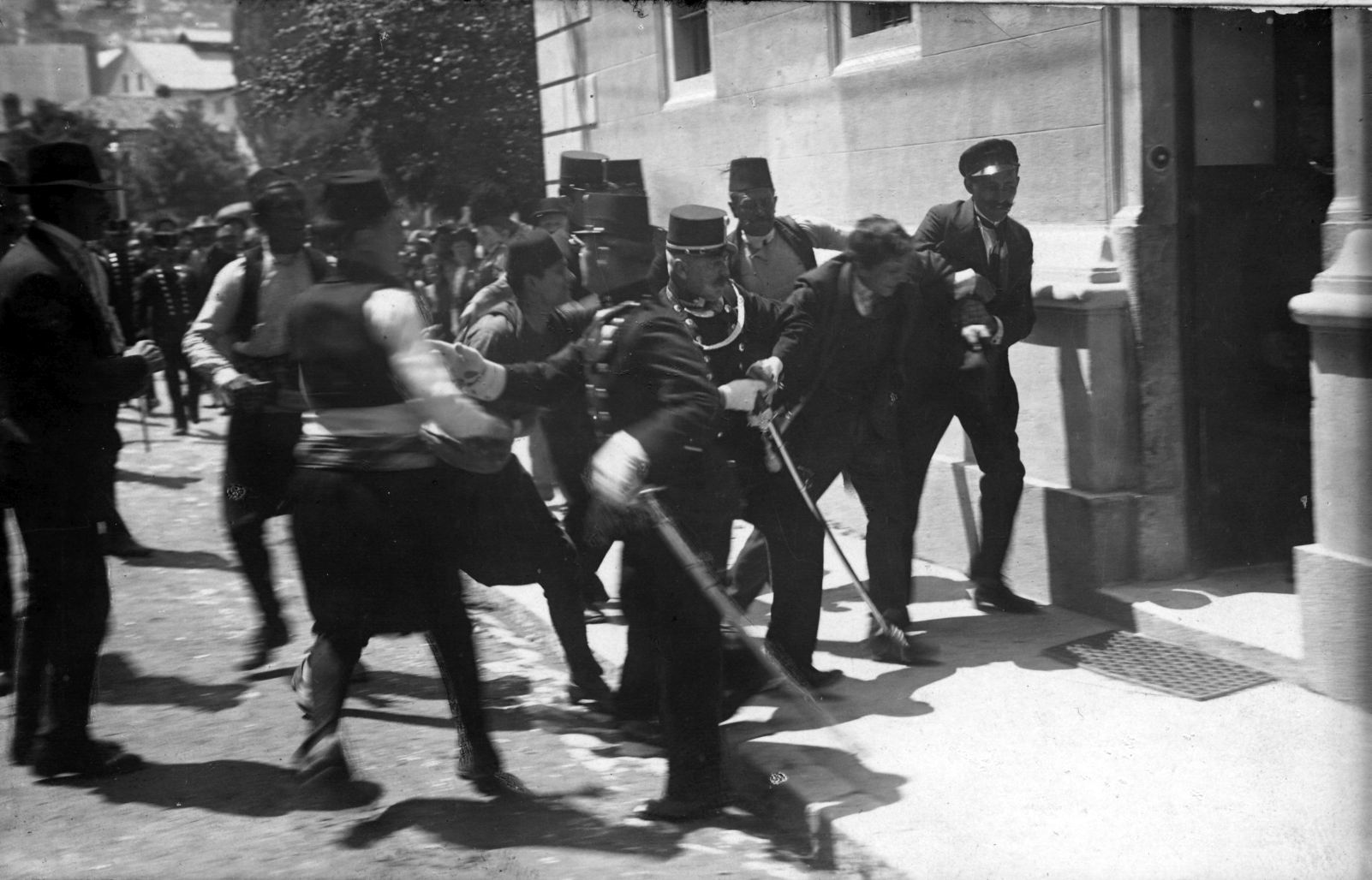
Sarajevo, 28 June 1914: police seize a man after the assassination of Archduke Franz Ferdinand. The photograph is often said to show the assassin, Gavrilo Princip, but several scholars say it shows Ferdinand Behr, a bystander who was briefly suspected. Photo: unknown photographer / Wikimedia Commons, Public domain
01A restless night
This chapter settles what a third world war would mean, and whether one has started.
Late on 10 November 2026, four drones flew out of Belarus toward 's eastern border. At about 1.20 in the morning, one of them crossed into Lithuania. NATO fighter jets tried twice to shoot it down near the town of Biržai. One missile missed and fell to the ground.
The drone flew on into Latvia, then Estonia, and finally into Russia. Air-raid warnings sounded across all three Baltic states, and Finland restricted planes and ships in the eastern Gulf of Finland. Lithuania's president, Gitanas Nausėda, called it a “restless and difficult” night.
Nobody could say whose drone it was. Ukraine had launched a large drone attack on Russia that night. A Lithuanian rear admiral said there was no confirmed information on the drone's type, and he could not say whether it was Ukrainian or Russian.
Timeline
Drones at the edge of the war, 2026
Drone downed over EstoniaA Romanian NATO fighter destroys a suspected Ukrainian drone that entered from Russia. In Latvia, a drone hits an oil storage site.
Estonia's foreign minister blames Russian interferenceHe says Russia is directing Ukrainian drones into NATO territory.
NATO aircraft shoot down a drone over Lithuania
Moldovan border post hitA projectile from Russian strikes ricochets into a bus and a border booth at Palanca. One border guard is lightly injured.
Suspected drone explodes in northern Lithuania
NATO jets miss a drone over LithuaniaIt crosses Lithuania, Latvia and Estonia into Russia. Air-raid warnings in all three Baltic states.
Selected incidents on NATO's and Moldova's borders with the war in Ukraine.
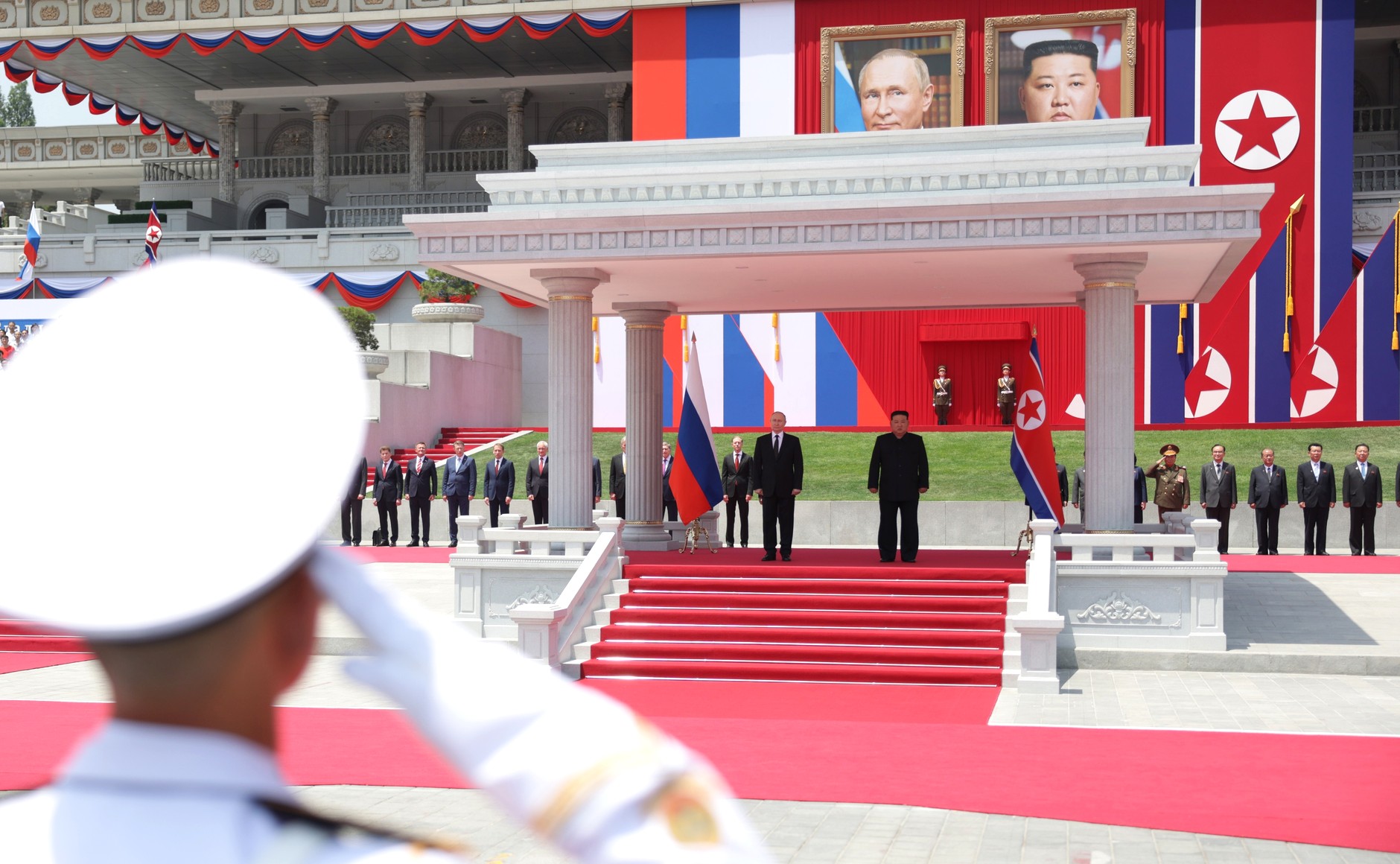
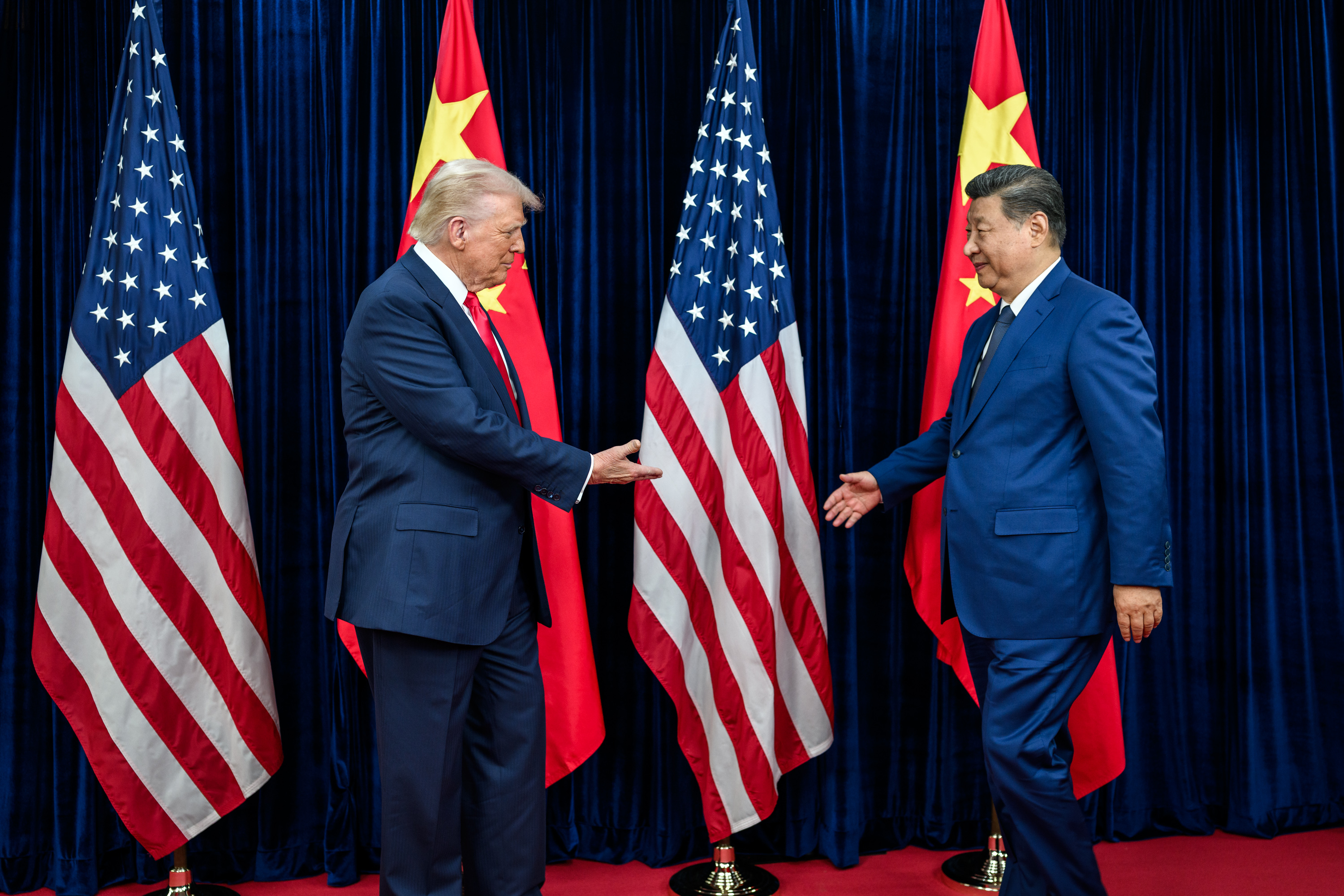
Eight days later, in Shenzhen, the leaders of the United States, China and Russia sat together for about an hour and a half. Their joint statement said “there can be no winners in a nuclear war”. Both scenes belong to the same autumn. Together they raise the question many people now ask. Has a third world war already begun?
✓Answered: How could a wider war actually start, and what has stopped each flashpoint from widening so far?
A world war means great powers fighting each other directly, with their own forces, in more than one region. That has not happened since 1945.
To answer that, you need a working test. This story uses one with three parts. Great powers fight each other directly. They use their own forces. And they fight in more than one region. By that test, it has not happened since 1945.
Part of the test is already met. Russia's full-scale war in Ukraine is nearly five years old. The United States and Israel have been at war with Iran since 28 February 2026. So two of the world's biggest military powers are fighting, on two continents.
Side by side
The world-war test, against November 2026
A third world war would need
Where late 2026 stands
Who fights
Great powers
Met: Russia is at war in Ukraine; the US is at war with Iran
How
Directly, against each other, with their own forces
Not met: the US, China and Russia met together in Shenzhen on 19 November
Where
More than one region
Wars in Europe and the Middle East, but not great power against great power
A working test, not an official definition.
But they are not fighting each other. , and met in Shenzhen on 19 November 2026, on the sidelines of a regional summit, and signed a joint statement. The line that would make this a world war is a direct clash between them.
In this story's reading, the routes across that line run through accidents and misjudged crises as much as through deliberate choices. That is why a stray drone matters.
✓Answered: Has a third world war already started, and how close are we to one?
No world war is under way, and it is not the likeliest outcome. But 2026 has more of the old warning signs than any year since the Cold War ended.
So here is the short answer. No third world war is under way. On this story's reading, it is not the most likely outcome either.
But 2026 combines more of the conditions that came before 1914 and 1939 than any year since the ended. That is a judgment. It rests on three facts.
Two hot wars involve great powers: Russia in Ukraine, and the US and Israel against Iran.
pressure, the kind that stops short of open war, is live in three places: drones over the Baltic, Chinese military pressure around Taiwan, and coast guard clashes in the South China Sea.
No treaty now limits US and Russian nuclear forces. , the last one, expired on 5 February 2026.
By the numbers
The warning signs of 2026
2hot wars involving great powers: Ukraine and Iran
3places with live gray-zone pressure: the Baltic, Taiwan, the South China Sea
0treaties limiting US and Russian nuclear forces since 5 February 2026
Some brakes still hold. The leaders of the three biggest nuclear powers still talk. The Iran war has been costly and unpopular in America, and Trump's party lost both chambers of Congress on 3 November. Each brake, in this story's reading, is weaker than it was. The danger is several weakening at once.
To judge those warning signs, you need to see how the last two world wars began. Both started as regional quarrels.
A warning sign only means something if you know what it once warned of. So before returning to 2026, this story goes back to 1914.
Both world wars began as regional conflicts. The first started with a killing in the Balkans. The second began in Europe over Poland, while a war between Japan and China had been running since 1937. In each case, promises that great powers had made to partners widened a local fight.
Those promises have modern versions. NATO opened its July 2026 summit declaration by reaffirming its “ironclad commitment” to , the pledge that an attack on one member is an attack on all. Russia and North Korea signed a mutual-aid treaty in June 2024.
That is why the old wars are useful as a checklist. They are dangerous as a prophecy.
✓Answered: Which warning signs from 1914 and 1939 are back today?
02Five weeks in 1914
This chapter settles how a single murder became a continental war in days.
On 28 June 1914 a Bosnian Serb nationalist shot the heir to Austria-Hungary's throne. Five weeks later Europe's great powers were at war.
On 28 June 1914, in Sarajevo, and his wife Sophie were shot dead. He was heir to the throne of Austria-Hungary. The killer was a young Bosnian Serb nationalist, .
It began as a quarrel between two states, Austria-Hungary and Serbia. It did not stay that way. By 4 August, Britain was at war with Germany, and every great power in Europe was fighting.
In this story's reading, two things made it spread so fast. One was a pair of rival alliance blocs. The other was , the calling-up of reserves and moving of armies to the frontier, which in 1914 ran to railway timetables. Once those plans started, there was little room to stop.
✓Answered: How did one murder in Sarajevo become a world war in five weeks?
Two alliance blocs and an arms race meant a quarrel between two states could pull in all the rest.
Europe in 1914 was split into two camps. Germany and Austria-Hungary had been allied since the Dual Alliance of 1879. They became the . Against them stood France and Russia, allies bound to each other, and Britain beside them in the .
The camps were arming against each other. A naval arms race between Britain and Germany had been building since the 1890s.
And everyone could see the danger. In Vienna, Hungary's prime minister, István Tisza, opposed war on Serbia at first. He warned that it would probably bring in Russia, Serbia's protector. He was right. A war between any two members of the blocs risked pulling in all the rest.
Side by side
Two camps before the first shot
Entente and allies
Central Powers
In August 1914
France, Russia, Britain; Serbia and Belgium attacked
Germany and Austria-Hungary, allied since the 1879 Dual Alliance
Joined later
United States, April 1917
Ottoman Empire, November 1914
Left early
Russia, separate peace in March 1918
—
Who joined later
The Ottoman Empire joined the Central Powers in November 1914. The United States joined the Allies in April 1917. Russia left the war with a separate peace in March 1918.
Every step of the July Crisis was a decision, not an accident. Each had a promise or a war plan behind it.
Vienna did not act alone. On 5 and 6 July, Germany promised Austria-Hungary its firm support, and Kaiser Wilhelm II urged quick action against Serbia. That promise is known as the .
On 23 July, Austria-Hungary sent Serbia an ultimatum with a 48-hour deadline. Its demands were designed to be rejected. One would have let Austro-Hungarian officials take part in investigations inside Serbia. Serbia accepted most of the terms, with reservations. The historian calls its reply “a highly perfumed rejection on most points”.
On 28 July, Austria-Hungary declared war on Serbia. On 30 July, Russia ordered general mobilisation. Germany mobilised in turn and declared war on Russia, France and Belgium.
Germany's plan was to defeat France quickly, and its armies went through Belgium to do it. After the German invasion of Belgium, Britain declared war on Germany on 4 August. Each move answered the one before. That is how a regional crisis became a continental war in days.
Timeline
Five weeks from a Balkan murder to a European war
28 Jun 1914 – 28 Jul 1914
Sarajevo assassinationFranz Ferdinand and his wife Sophie are shot dead.
Germany's blank chequeBerlin promises firm support; the Kaiser urges quick action.
Ultimatum to Serbia48 hours to comply, with demands designed to be rejected.
Austria-Hungary declares war on Serbia
30 Jul 1914 – 4 Aug 1914
Russia orders general mobilisation
Germany declares war on Russia, France and Belgium
Britain declares war on GermanyAfter the German invasion of Belgium.
The July Crisis, 28 June to 4 August 1914. Each step answered the one before.
Germany planned a quick knockout of France. Instead the war lasted more than four years, killed 9 to 11 million soldiers and ended four empires.
The quick knockout failed. The German advance into France was halted in September 1914. Instead of a knockout, the fighting dragged on for four more years.
Then the war widened again. Early in 1917, Germany resumed , sinking ships without warning. In April 1917 the United States joined the Allies. In March 1918, revolutionary Russia made a separate peace. The fighting ended with the of 11 November 1918.
The cost was enormous. Estimates put military deaths at nine to 11 million, and civilian deaths at about six to 13 million. The Russian, German, Austro-Hungarian and Ottoman empires all collapsed.
Casualty figures are estimates; historians still debate the ranges.
Historians still argue over the blame: German ambition, or miscalculation in every capital.
More than a century on, the blame is still disputed.
In 1961 the German historian argued that Germany “deliberately instigated a world war to become a world power”. His critics replied that he took Germany out of its European context. France and Russia had war aims too. In 2013 a leading German historian, Gerd Krumeich, wrote that among historians Fischer “is no longer taken seriously today”.
, in The Sleepwalkers, spreads responsibility across the capitals. He is sharp on Serbia's role as well as Austria's.
DisputedWho bore the most responsibility for 1914?Was World War I driven by one power's ambition or by everyone's miscalculation?
Fritz Fischer, 1961
Germany deliberately instigated a world war to become a world power.
Fischer's critics; Christopher Clark
Germany must be seen in its European context: France and Russia had war aims too, and responsibility was spread across the capitals, Belgrade included.
Where it stands: Not settled. This story reads it as deliberate gambles taken inside a system that made escalation hard to stop.
This chapter settles why the 1919 peace failed, and how the second war became the deadliest in history.
Versailles punished Germany enough to anger it, but not enough to contain it.
The winners wrote the peace in Paris in 1919. In the , Germany accepted responsibility for the war and liability for . In 1921 a commission set the bill at 132 billion gold marks.
Germany also lost about a tenth of its prewar European territory and all its colonies. Its army and navy were capped.
In this story's reading, that was the trap. The settlement humiliated Germany without disarming it for good, and it left grievances that the next generation of German leaders would exploit.
✓Answered: Why did the peace after 1918 collapse into an even worse war only twenty years later?
The peace had no reliable enforcer: America, which had tipped the war, never joined the League meant to defend it.
A peace holds only if someone defends it. The treaty created the , meant to be both a world forum and a collective-security system.
But the country that had tipped the war never joined. The US Senate's final vote on the treaty, on 19 March 1920, fell seven votes short. America made a separate peace with Germany in 1921 and stayed out of the League.
In this story's reading, that left the League dependent on members who were absent, divided or unwilling, as the next beat shows. Meanwhile, regimes rose in Italy, Germany and Japan, governments that wanted to overturn the order the war had left.
In 1914 the crisis lasted five weeks. Before 1939 the tests ran for eight years, and none was answered by force.
The big difference from 1914 is the tempo. The first war followed a crisis of five weeks. The second followed a decade of tests.
It began in Asia. After an explosion near Mukden on 18 September 1931, Japan overran Manchuria within months. The League investigated. When it adopted the report, Japan's delegation walked out and never returned.
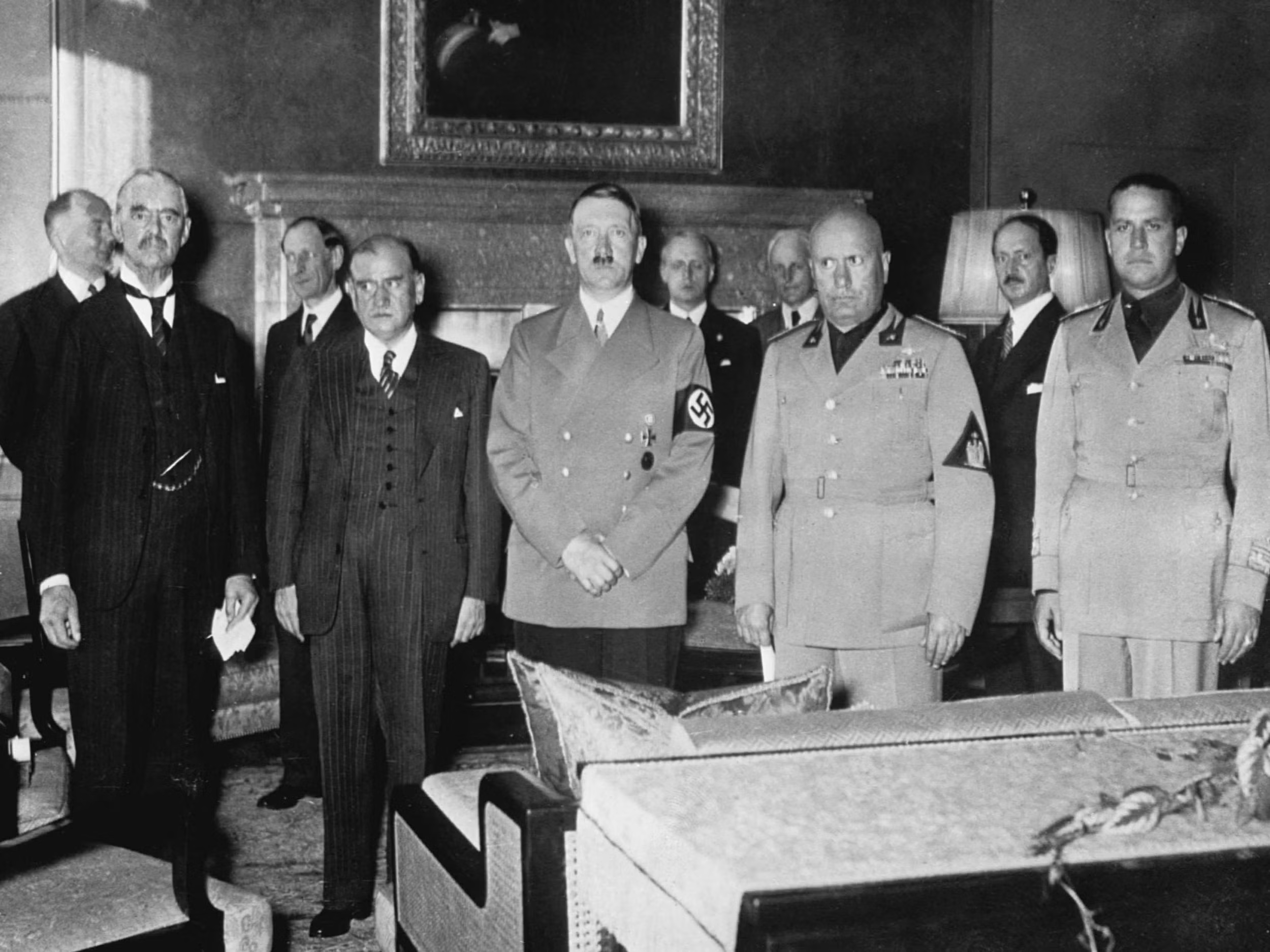
In October 1935, Italy attacked Abyssinia, now Ethiopia. The League imposed sanctions but left out coal and oil. On 7 March 1936, Germany sent troops into the demilitarised Rhineland. France protested but did not act. In March 1938, Germany absorbed Austria. At Munich in September 1938, it was handed the Sudetenland.
On 15 March 1939, German troops marched into the rest of Czechoslovakia. On 31 March, Britain promised to support Poland if its independence were threatened, and France stood with it. Germany invaded Poland on 1 September 1939.
Timeline
Eight years of unanswered aggression
Sep 1931 – Jul 1937
Japan seizes ManchuriaThe League investigates; Japan walks out in 1933.
Italy attacks AbyssiniaLeague sanctions leave out coal and oil.
Germany remilitarises the RhinelandFrance protests but takes no military action.
Japan and China at war
Mar 1938 – 31 Mar 1939
Germany absorbs Austria
Munich AgreementGermany may occupy the Sudetenland.
Germany occupies the rest of Czechoslovakia
Britain, with France, pledges to support Poland
Aug 1939 – 1 Sep 1939
Nazi-Soviet PactA secret protocol splits Poland and eastern Europe.
Germany invades PolandBritain and France declare war two days later.
Each test and how it was met, 1931 to 1939.
Appeasement became shorthand for failure, but historians still argue about what else was possible.
means making concessions to an aggressor in the hope of satisfying it. Its symbol is the . On 29 and 30 September 1938, Germany, Britain, France and Italy agreed to let Germany occupy the Sudetenland. Czechoslovakia was not in the room. flew home promising “peace for our time”.
Six months later, Germany took the rest of Czechoslovakia. That ended the pretence that its demands were limited.
The verdict has shifted over time. A 1940 polemic, Guilty Men, blamed the appeasers. Later historians argued Britain and France were unready for war, and that the policy had popular support. A third school says appeasement may have been the only option, but it was carried out poorly and too late. As early as the Rhineland in 1936, Britain's prime minister had said Britain lacked the forces to back France, and that public opinion would not allow it.
DisputedWas appeasement simply a blunder?Could Britain and France have stopped Hitler sooner?
Guilty Men (1940)
The appeasers were to blame for the war.
Revisionist historians
Britain and France were unready, and appeasement was a popular policy forced by real constraints.
Post-revisionists
It may have been the only viable option, but it was badly executed, too late and not enforced firmly enough.
Where it stands: Still argued. The hard question is whether firmness earlier, for instance at the Rhineland in 1936, would have worked.
World War II was really two wars, one in Asia and one in Europe, and they merged in December 1941.
Asia's war started first. Japan and China had been at war since 7 July 1937. In Europe, Germany had secured its eastern flank with the of August 1939. A secret protocol split Poland and eastern Europe between Hitler and Stalin. Britain and France declared war two days after Germany invaded Poland.
The two great powers that joined late decided how big the war got. The pact held until Germany invaded the Soviet Union on 22 June 1941. Japan's attack on Pearl Harbor in December 1941 brought in the United States. The naval balance in the Pacific turned at Midway in June 1942.
Germany surrendered on 8 May 1945. After atomic bombs fell on Hiroshima and Nagasaki on 6 and 9 August, Japan signed its surrender on 2 September. The bomb ended one war and opened the nuclear age.
It was the deadliest conflict in history. Estimates of the dead run from about 60 million to 75 million, most of them civilians, and some counts go higher. Six million Jewish people were murdered in the Holocaust.
Timeline
Two wars that merged into one
Two wars
Japan and China at war
Germany invades PolandBritain and France declare war on 3 September.
France falls
Germany invades the Soviet UnionThe Nazi-Soviet Pact ends.
One war
Japan attacks Pearl HarborThe United States enters the war.
Battle of Midway
Germany surrenders
Atomic bombs on Hiroshima and Nagasaki
Japan signs its surrender
By the numbers
The deadliest conflict in history
60–75 millionEstimated dead, most of them civilians
26.6 millionSoviet losses, by Russian government figures
20 millionChinese war dead, by China's own count
6 millionJewish people murdered in the Holocaust
All figures are estimates, and counts differ by source.
04Why the cold war stayed cold
This chapter settles why the great powers haven't fought each other since 1945, and which supports are cracking.
The postwar order rested on three things: institutions, alliances and nuclear deterrence.
For eighty years, no two great powers have fought each other directly. The system built after 1945 was meant to stop a third world war, and it stood on three pillars.
The first was institutions. The United Nations Charter of 1945 gave five permanent members of the Security Council, China, France, Russia, Britain and the United States, the power to block binding decisions. That kept every great power inside the system, at the price of letting each one stop it.
The second was alliances. In 1949, twelve countries signed the North Atlantic Treaty and created . They agreed that an attack on one would be treated as an attack on all. After West Germany joined NATO in 1955, the Soviet Union formed its own alliance, the Warsaw Pact.
The third was the bomb. Once each side could destroy the other, a direct war became too costly to start. That is . On this story's reading, it is the main reason the never turned hot.
How it fits together
Three pillars under one goal
Goal: no direct war between great powersThe order built after 1945
Three pillars
Institutions UN Charter, 1945, with five Security Council vetoesAlliances NATO, 1949; the Warsaw Pact answered in 1955Nuclear deterrence Direct war became too costly to start
In 2026All three are under strain
✓Answered: Why haven't the great powers fought each other directly for eighty years, and which of those restraints are cracking?
The closest call came over Cuba in 1962. Afterwards the superpowers built a hotline and a run of treaties.
The rivalry did not stay peaceful. Soon after NATO's founding, war broke out in Korea. Much of the Cold War's fighting took the form of , where the superpowers backed opposing sides. And once it came close to the edge.
In October 1962, an American spy plane photographed Soviet missile sites being built in Cuba. On 22 October, President Kennedy ordered a naval “quarantine” of the island. The word was chosen over “blockade” to avoid implying a state of war. On 27 October, a US spy plane was shot down over Cuba. The next day, Khrushchev announced that the missiles would be removed.
Afterwards the two sides built guard rails. They set up a direct “Hotline” between the White House and the Kremlin, and took the first steps toward the Limited Test Ban Treaty of 1963. treaties followed: SALT I and the ABM Treaty in 1972, and the in 1987.
Timeline
Arms control: built after Cuba, unwound since 2019
Building
Cuban Missile Crisis
Hotline; Limited Test Ban Treaty
SALT I and the ABM Treaty
INF Treaty
New START enters force
Unwinding
US withdraws from the INF Treaty
Russia suspends participation in New START
New START expiresNo follow-on agreed.
In 2026 all three pillars are under strain, and the last cap on US and Russian nuclear forces is gone.
That order is now fraying. Take the supports one at a time.
Arms control has unwound. The US left the INF Treaty in August 2019. Russia suspended its participation in in February 2023, and the treaty expired on 5 February 2026.
Alliances are strained from inside. At NATO's Ankara summit in July 2026, Trump renewed threats to annex Greenland, which belongs to a NATO ally, Denmark. He suggested US troop levels in Europe could depend on it.
Trade has become a weapon. In late November, Washington announced a new 20 percent levy on Chinese goods and threatened 40 percent if talks break down. Beijing said it “reserves the right” to retaliate.
The institutions still meet, but mostly to talk. In Shenzhen on 19 November, Trump, Xi and Putin called for reform of the UN Security Council. In this story's reading, the order is bent, not broken. What worries historians is the 1930s shape: one power testing limits while the others disagree on how to answer.
Side by side
What has weakened since
The pillar
What has changed by November 2026
Nuclear deterrence
Managed by treaties
INF gone since 2019; New START expired 5 February 2026
Alliances
US guarantees in Europe and Asia
At Ankara, Trump renewed threats to annex Greenland and linked US troop levels to it
Economic ties
Trade to raise the cost of war
New 20 percent US levy on Chinese goods; China 'reserves the right' to retaliate
Institutions
UN Security Council
Trump, Xi and Putin call for reform; the Council has ended neither war
✓Answered: What does it mean that no treaty limits US and Russian nuclear weapons any more?
05What repeats
This chapter settles which ingredients both world wars share, and why they work as a checklist but not a forecast.
Alliance chains turned local wars into world wars twice, and today's defence pacts are built the same way.
Historians do not agree on a single cause of either war. But the same ingredients turn up in both, and each has a modern counterpart.
Start with the chains. In 1914, a Balkan quarrel drew in Russia, Germany, France and Britain within a week, because each had promised to back a partner. In 1939, the British and French promise to Poland did the same job. It turned a German invasion into a European war.
Today's chains are easy to name. NATO members call their commitment “ironclad”. Russia and North Korea have promised to aid each other if either is attacked. The United States has a defence treaty with the Philippines, whose sailors clash with China's coast guard.
Side by side
Ingredients then and now
1914
1939
Today
Alliance chains
A Balkan quarrel pulls in four great powers within a week
The promise to Poland turns an invasion into a European war
NATO's Article 5, the US-Philippines treaty, the Russia-North Korea pact
Short-war hopes
A quick knockout of France
Lightning campaigns in 1939 and 1940
Trump said in March the Iran war would be over 'very soon'
Rising against ruling
Germany and Britain
Germany and Japan against the status quo
China and the United States
Trade ties
Angell argued war could not pay
World trade broken by the Depression
US-China truce to 10 January 2027, with tariffs loaded
A checklist, not a prediction.
Leaders who start big wars tend to expect them to be short, and they are usually wrong.
Germany's 1914 plan was to defeat France quickly. The war lasted until November 1918.
The habit has not gone away. Russia's full-scale war in Ukraine is nearly five years old. When the US and Israel struck Iran on 28 February 2026, Trump said within days that the war would be over “very soon”. Nine months later it has not formally ended.
Our reading of the record is that both world wars began with leaders surprised by how fast events moved and how long the fighting lasted. The same surprise shows up in 2022 and 2026.
A famous study says rising powers usually end up at war with ruling ones, and that trade ties don't stop it. Both claims have critics.
of Harvard calls it : “a deadly pattern of structural stress that results when a rising power challenges a ruling one.” His team found 16 such cases over 500 years. War broke out in 12 of them. Sixteen cases over five centuries is a small base for a rule, and critics say the cases were chosen to fit.
Trade was supposed to be the cure. In The Great Illusion, first published in 1909, argued that war between industrial nations could not pay. Five years later they went to war anyway. Trade raises the cost of war. It does not remove the motive.
The modern pair is the United States and China. For now their leaders keep meeting: Beijing in May, Washington in September, Shenzhen in November. Yet each side keeps its economic weapons loaded. Without a new deal, China's extra 24 percent tariff on US goods returns after 10 January 2027.
Sarajevo warns against escalating too fast, and Munich warns against conceding too much. The hard part is knowing which case you are in.
History hands leaders two opposite lessons. Sarajevo is the warning against escalating too fast. In 1914 each capital moved quickly, and a regional crisis became a continental war in days.
Munich is the warning against conceding too much. In September 1938, Britain and France let Germany take the Sudetenland. Six months later Germany took the rest of Czechoslovakia.
In this story's reading, both lessons hang over 2026. The Munich lesson is the case against handing Russia Ukrainian land it has not taken. The Sarajevo lesson is the case for caution when a stray drone crosses into a NATO state. Both can be right in different cases. Knowing which case you face is the hard part, and leaders tend to apply the lesson they remember.
DisputedTwo opposite lessons from historyWhich mistake is the bigger danger in a crisis?
The Sarajevo lesson, 1914
Escalating too fast turns a regional crisis into a continental war in days.
The Munich lesson, 1938
Conceding too much to an aggressor invites the next demand.
Where it stands: Both can be right in different cases. The hard part is knowing which one you are in.
Big claims about why great powers go to warReadings
Big claims about why great powers go to war
1Argued
Rising and ruling powers fall into war
The caseAllison's team found war in 12 of 16 such cases over 500 years.
The counterSixteen cases is a small sample, and critics say the cases were chosen to fit.
2Argued
Trade makes war irrational
The caseNorman Angell argued in 1909 and 1910 that war between industrial nations could not pay.
The counterThe industrial powers went to war in 1914 anyway.
3Argued
Concessions invite aggression
The caseMunich was followed six months later by the seizure of the rest of Czechoslovakia.
The counterSome historians argue Britain and France had no better option in 1938.
Arguments, not settled findings.
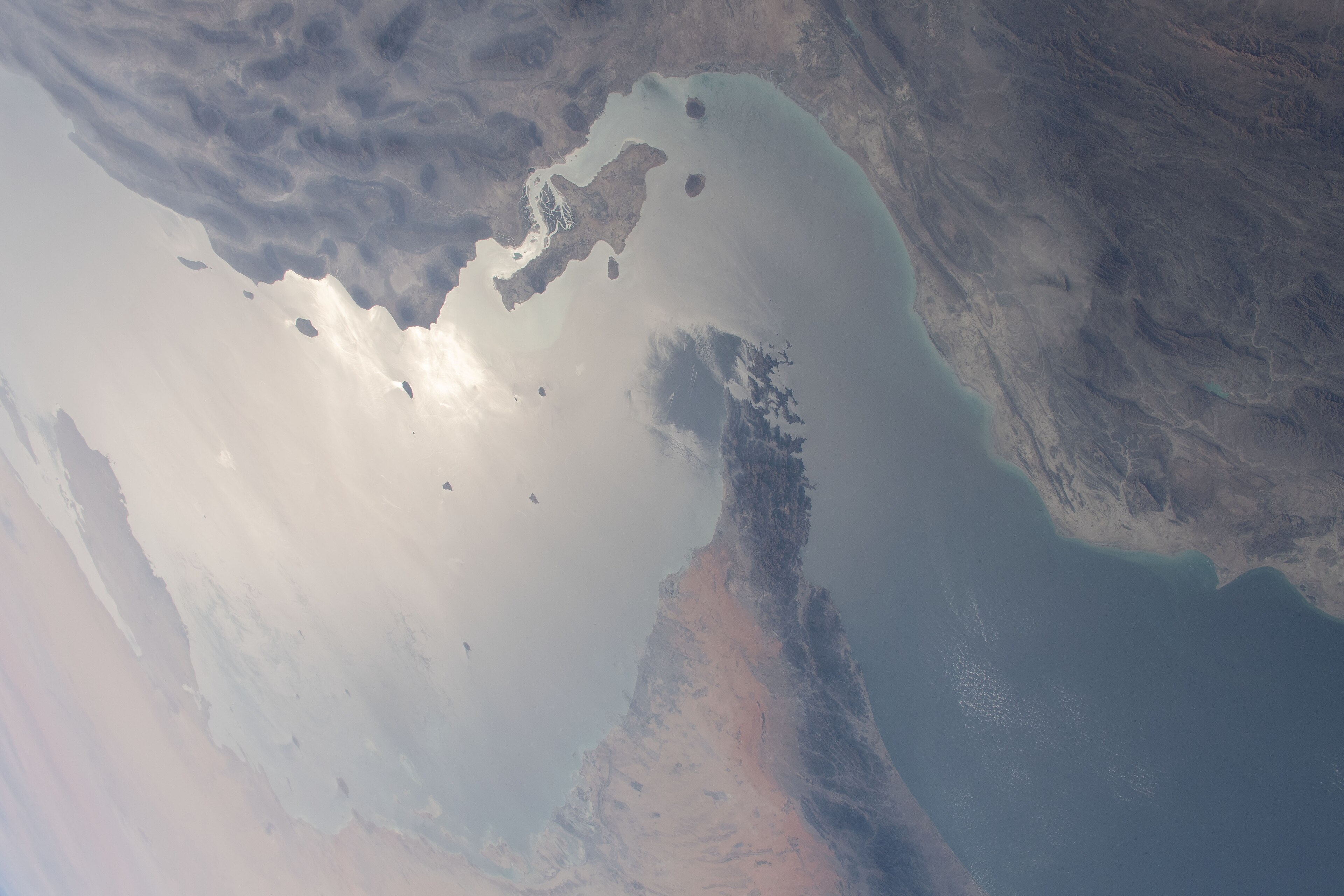
The Strait of Hormuz photographed from the International Space Station in March 2021, with Iran across the top and the Arabian peninsula below. In 2024 about a fifth of the world's oil consumption passed through it. Photo: NASA Johnson Space Center / Wikimedia Commons, Public domain
06Two hot wars
This chapter settles who stands where at the end of November 2026, and where the wars in Iran and Ukraine have got to.
In 1914 and 1939 the great powers sat in fixed blocs. In 2026 they fight in some places and negotiate in others.
Start with the shape of the board. In 1914, the great powers were locked into two opposed camps before a shot was fired. Today the lines are looser. In 2026 has fought Iran, brokered talks on Ukraine and met three times.
On the other side, Russia, China, Iran and North Korea cooperate more than ever. North Korea is the only one to put troops in someone else's war, fighting for Russia. Russia has passed upgraded drone technology and intelligence to Iran. China helps Russia get round sanctions and keeps buying its oil.
Analysts at the Center for a New American Security call this the . describes it as “not a formal alliance but an adaptive network”. Russia's support for Iran in its 2026 war was, in her words, “operationally meaningful, but carefully bounded”. And she calls Iran “probably Russia's most replaceable partner. China is different.”
Two kinds of tie: a defence pact between partners, and a truce between rivals.
How it fits together
Who stands where, November 2026
Great powers
No joint war planAnalysts call Russia, China, Iran and North Korea an 'adaptive network', not a formal alliance
↓ Arms, aid, technology
Fighting now
Houthis Attacks on Saudi Arabia
Mediators and hedgers
India, Saudi Arabia, Türkiye Tied to neither bloc
A simplification. Lines of support are drawn from public reporting.
✓Answered: Are Russia, China, Iran and North Korea a new Axis?
The US and Israel went to war with Iran on 28 February 2026. A spring ceasefire collapsed in July.
The second hot war began by striking at the top. US and Israeli airstrikes began on 28 February 2026, and the first wave killed Supreme Leader Ali Khamenei and other senior officials. His son, , was later named Supreme Leader. Iran fired missiles at Israel and at US bases in Qatar, Kuwait, the UAE and Bahrain.
A pause came and went. On 7 April, Trump announced a two-week ceasefire, mediated by Pakistan. Talks in Islamabad failed, and the US imposed a on Iran's ports. In June the two sides signed a memorandum meant to end the war. On 8 July it collapsed, after Iran attacked commercial ships in the .
The war spread at the edges. Israel has fought Hezbollah in Lebanon, and Iran's Houthi allies in Yemen have launched missile and drone attacks on Saudi Arabia. Saudi Arabia downed missiles fired at Riyadh in November.
Timeline
Nine months of the Iran war
28 Feb 2026 – June 2026
US and Israeli strikes beginSupreme Leader Ali Khamenei is killed.
Two-week ceasefire, mediated by Pakistan
Islamabad talks fail; US naval blockade
Memorandum to end the war signed
8 Jul 2026 – 17 Nov 2026
Ceasefire collapsesIran attacks commercial ships in Hormuz.
Drone attack on US radar in Bahrain; US strikes Qeshm
19 Nov 2026 – 26–27 Nov 2026
Trump defers decision on major strikes to the new year
Two Italians killed in Kuwait; tanker hits mine in HormuzIran denies the Kuwait attack.
Nobody has a settled death toll. Counts compiled from the UN's humanitarian office and from rights groups range from about 3,400 to 7,650 dead in Iran. The highest, from the rights group Hengaw, dates from early April, and none of the counts has been finalised or verified. The Pentagon counted 23 American service members killed by late October; independent estimates say 26.
Side by side
Who counts the Iran war's dead
Lower count
Higher count
Killed in Iran
3,375, UN humanitarian office (OCHA)
7,650, Hengaw rights group, 8 April
US service members killed
23, Pentagon, late October
26, independent estimates
Killed in Israel
72 to 74, Israeli figures to 5 August
—
Unverified compilations, not final. Hengaw's figure dates from 8 April 2026.
✓Answered: Where do the wars in Iran and Ukraine stand now, and is either ending?
On 9 November Trump called the Iran war “militarily effectively over”. The blockade, the attacks and the standoff go on.
After meeting Qatar's prime minister on 9 November, Trump told reporters: “Iran militarily is effectively over.” He added: “We're just keeping it the status quo.” He also said the US was “locked and loaded”.
The status quo is not peace. The US blockade of Iranian ports stays in place. US forces struck Qeshm Island, in the strait, after an Iranian drone attack on a US radar in Bahrain on 17 November. On 26 November, two Italian civilian workers were killed in a drone attack in Kuwait attributed to Iran. Iran denied it and called it a false flag. On 27 November, Iran's Revolutionary Guards said a tanker had hit a mine in the strait and exploded.
What comes next is deferred. On 19 November Trump said he would decide on any renewed major strikes “after the beginning of the year”, and added: “We've got time.” According to Axios, Israeli officials want a new joint campaign of four to seven days.
The bill shows up in oil, in shipping and at the ballot box.
Before the war, about 20 million barrels of oil a day passed through the Strait of Hormuz, roughly a fifth of global consumption. In early November, the UK's maritime trade agency counted 170 outbound and 155 inbound transits in its weekly report. Gulf News put that at about 65 percent below pre-conflict levels. The agency described shipping as “well below normal but not stalled”.
closed at about $73 a barrel on the last trading day before the strikes. On 30 April it touched $126. By 18 November it had fallen to about $92.
Chart
Brent crude through the Iran war
27 Feb 2026, last close before strikes72.87$ per barrel
30 Apr 2026, intraday high126$ per barrel
9 Nov 202693.38$ per barrel
18 Nov 202691.95$ per barrel
Dollars per barrel. The 30 April figure is an intraday high.
The political bill came on 3 November. Democrats won control of both the House and the Senate. Many Republicans, including Vice President JD Vance, blamed the unpopular war. Yet on 19 November the outgoing Senate rejected a to block further strikes, by 51 votes to 48. The new Congress does not sit until 3 January.
Ukraine talks resumed in Abu Dhabi in November without a breakthrough on ending the war. Both sides then raised the cost of the war.
On 10 and 11 November, Ukraine and Russia met in Abu Dhabi for talks mediated by the United States. Moscow still demands that Ukraine withdraw from eastern areas Kyiv controls, and it rejects an immediate ceasefire. said territory must be settled at leaders' level. He also said swaps of 1,000 or even 1,500 prisoners each were under consideration. The talks ended with agreement on a large-scale prisoner swap, but no breakthrough on ending the war.
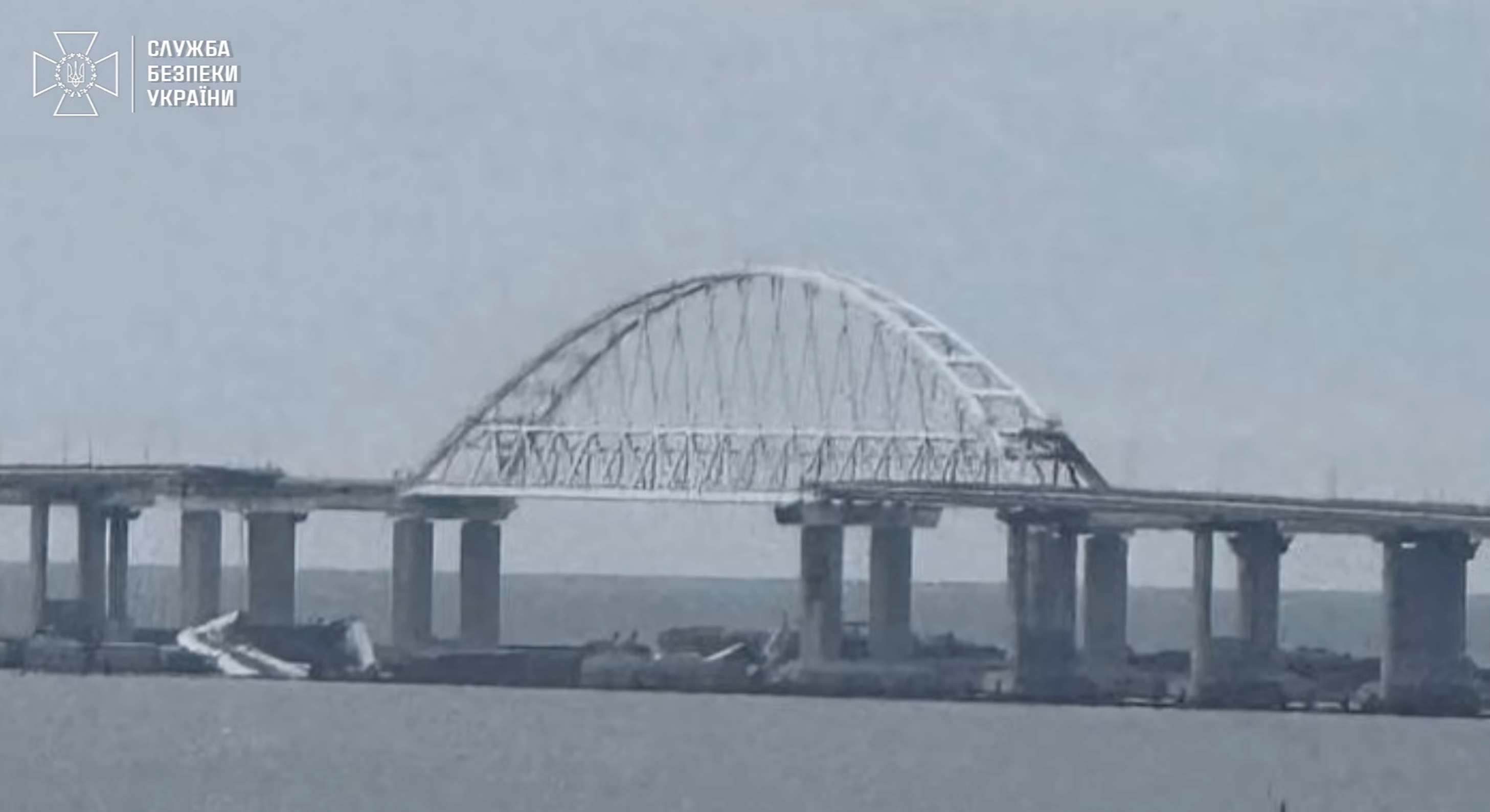
Then Ukraine struck the Kerch Bridge, which links Russia to Crimea, three times in four days. Zelenskyy said a large section of the road deck had collapsed. In Shenzhen, said: “We will not negotiate after the attacks on the Crimean bridge.”
The refinery war goes on. On 15 November, Zelenskyy said Ukrainian strikes had disabled more than 55 percent of Russia's oil-refining capacity. CNBC did not independently verify that figure. On 25 November, Putin called retaliation “inevitable”. A day later, Zelenskyy warned that Russia was finishing preparations for a new mass attack on Ukraine's power grid.
Timeline
Ukraine, autumn 2026
US-mediated talks in Abu DhabiNo breakthrough on ending the war; agreement on a large-scale prisoner swap.
Zelenskyy: over 55% of Russian refining disabledA claim CNBC did not verify.
Kerch Bridge hit three times in four days
Putin rules out negotiating after the bridge attacks
Putin calls retaliation for refinery strikes 'inevitable'
Zelenskyy warns of a mass strike on the power grid
07Summits and shoals
This chapter settles where Asia's flashpoints stand, and why the US-China summit track matters so much.
On 19 November 2026, Trump, Xi and Putin met together for the first time. They agreed on words about nuclear war, and little else.
The Asia-Pacific summit in Shenzhen produced a rare picture. After a bilateral meeting with Trump, Xi hosted the first three-way meeting of the leaders of China, the United States and Russia. It lasted about an hour and a half.
The joint statement reaffirmed “strategic stability”. It said “there can be no winners in a nuclear war, and that it should never be unleashed.” The leaders also promised to raise oil and gas output. The statement did not mention Iran.
Trump and Xi agreed to draft an action plan for “a constructive China-U.S. relationship of strategic stability”. No tariff relief was announced. Within a week, Washington announced a new 20 percent levy on Chinese goods. The runs out on 10 January 2027.
Timeline
Summits and shoals, 2026
14–15 May 2026 – 23–25 Sep 2026
Trump in BeijingChinese air activity around Taiwan drops to zero.
Baton blow at Second Thomas Shoal
Water cannon at Scarborough Shoal
Xi's state visit to WashingtonTrade truce extended to 10 January 2027.
Late Sep 2026 – Week of 25 Nov 2026
China claims control beyond 24 nautical miles around the shoals
At least six Philippine-Chinese encounters
Trump, Xi and Putin meet in Shenzhen
New 20% US levy on Chinese goods
Around Taiwan, Chinese air activity fell in 2026 as the summits went on. Trump has called the island's arms package a “negotiating chip”.
Asia's biggest flashpoint has been quieter in the air this year. Chinese military sorties around Taiwan ran between 173 and 274 a month from January to May 2026. May's 274 was 40 percent below May 2025. On 14 and 15 May, while Trump was in Beijing, they fell to zero. Chinese warships kept up their presence.
Chart
Chinese military sorties around Taiwan, 2026
May 2025458sorties per month
Jan 2026270sorties per month
Feb 2026190sorties per month
Mar 2026173sorties per month
Apr 2026229sorties per month
May 2026Zero on 14 and 15 May, during Trump's Beijing visit274sorties per month
Monthly aircraft sorties tracked by the Taiwan Security Monitor.
The quiet has a price for Taipei. A $14 billion US arms package for Taiwan has been held up all year. After his Beijing visit, Trump called it a “very good negotiating chip” with China. When Washington approved an $11.1 billion package in December 2025, China answered with large drills around the island.
So the lull may be temporary. Analysts at the Heritage Foundation, writing an opinion piece, expect it to end. , Taiwan's president, is still waiting on the package.
In the South China Sea, a baton blow and water cannon show how a US defence treaty could be triggered.
The South China Sea has been rougher. On 20 July 2026, at Second Thomas Shoal, a Chinese coast guard boat harassed a Philippine outpost. According to the Philippine military, its crew hit a Filipino sailor on the head with a wooden baton. China said the Philippine boats had rammed first. The US State Department called China's actions “dangerous and aggressive”.
It did not stop there. China used water cannon against Philippine vessels at Scarborough Shoal days later. In late September, Chinese state media said China's control around both shoals now extended beyond 24 nautical miles. In the first part of October, the two sides' forces had at least six encounters.
Behind the headlines, North Korean troops fight for Russia, and India and Pakistan still have no settled peace.
Two older flashpoints sit in the background. The first is Korea. On 19 June 2024, Putin and signed a pact committing each to aid the other if attacked. At the start of 2026, South Korea's spy agency counted about 11,000 North Korean troops in Russia's Kursk region. It estimated that about 6,000 had been killed or wounded. In June 2026, Xi visited Pyongyang for the first time in about seven years. estimates North Korea has assembled about 60 nuclear warheads.
The second is South Asia. In May 2025, after a militant attack in Kashmir, India struck nine sites in Pakistan and Pakistan-administered Kashmir. A US-brokered ceasefire has held since. But India's suspension of the stands. On 15 September 2026, an Indian destroyer and a Pakistani patrol vessel collided in the Arabian Sea. It was their first direct military confrontation since May 2025.
Side by side
Two flashpoints in the background
Korean peninsula
India and Pakistan
Ties
Russia-North Korea mutual-aid pact, 19 June 2024; Xi visits Pyongyang, June 2026
Neither in a bloc; a US-brokered ceasefire since May 2025
Latest pressure
About 11,000 North Korean troops in Kursk at the start of 2026; about 6,000 killed or wounded
Indus Waters Treaty still suspended; naval collision on 15 September 2026
Nuclear
About 60 assembled warheads (SIPRI estimate)
Both nuclear-armed
08No nuclear cap, and the paths to a wider war
This chapter settles what the end of New START changed, the plausible routes to a wider war, and the brakes on each.
Since 5 February 2026 no treaty limits US and Russian nuclear forces, and nobody inspects them.
The quietest change of 2026 may matter most. limited each side to 1,550 , the ones ready for use on missiles and bombers. It also capped them at 700 deployed missiles and bombers. It expired on 5 February 2026.
There was a way to keep the limits. In September 2025, Putin proposed that both sides informally observe them for a year. The United States never formally replied. On the day the treaty lapsed, Trump said he wanted a “new, improved, and modernized Treaty”. Six days later, Russia's foreign minister said Russia would keep to the old limits only as long as the US did.
DisputedDoes anyone still observe the old limits?What happened to New START's limits after 5 February 2026?
Russia
Putin offered in September 2025 to observe the central limits for a year. Lavrov said on 11 February 2026 that Russia observes them only as long as the US does not exceed them.
United States
No formal reply to Putin's offer. Trump wants a 'new, improved, and modernized Treaty' that includes China.
China
'China will not take part in nuclear disarmament negotiations at this stage.'
Where it stands: No binding limit and no inspections. Whether either side has added deployed warheads since February is not publicly known.
The arsenals behind the old ceiling are large. SIPRI estimates 12,187 nuclear warheads worldwide in January 2026, about 4,012 of them deployed. The US and Russia hold about 83 percent of the warheads in military stockpiles. These are outside estimates, not official counts.
By the numbers
The world's nuclear arsenals, January 2026
12,187Warheads worldwide
4,012Deployed on missiles and aircraft
83%Share of stockpiled warheads held by the US and Russia
~620China's estimated arsenal, growing fastest
SIPRI estimates.
Washington wants China in any new deal, and China refuses. That turns a two-player problem into a three-player one.
So why not sign a new treaty? Because Washington wants China in it. On 6 February, China's disarmament ambassador said: “China will not take part in nuclear disarmament negotiations at this stage.”
China's arsenal is smaller but growing fastest. SIPRI estimates about 620 warheads, and says China is expanding its arsenal faster than any other country. In Shenzhen, the Kremlin said it would “continue dialogue on reducing nuclear risks” with China and the United States. No limits were agreed.
SIPRI's researchers are blunt about the risk. Matt Korda warned that leaders in some nuclear-armed states may not get accurate information in a crisis, “nor that they will act rationally” under tension.
Three live paths could lead to a wider war, and each has a brake that has held so far.
One runs through the Baltic. Drones have strayed into NATO airspace all year. In May, a NATO jet destroyed a suspected Ukrainian drone over Estonia. In October, a suspected drone exploded in northern Lithuania. If one kills people in a NATO state, allies must decide whether applies. Putin says Russia is ready for war with Europe but does not want one. The brake so far: NATO shoots drones down and stops there.
One runs through the sea off China. A coast guard clash kills a Filipino sailor, and Washington is pressed to honour its treaty with Manila. The brake: the summit track between Trump and Xi.
One runs through the Gulf. A deadly strike on US forces, or a renewed bombing campaign, could widen the Iran war. The brake: the war's cost, its unpopularity, and mediators such as .
Side by side
Three paths to a wider war, and the brake on each
Trigger
Brake so far
Russia and NATO
A drone or missile kills people in a NATO state
NATO shoots down and stops there; Putin says he does not want war with Europe
US and China
A fatal coast guard clash with the Philippines
Three Trump-Xi summits in 2026; trade truce to 10 January 2027
US and Iran
Renewed bombing, perhaps a joint US-Israeli campaign, or a deadly strike on US forces
Cost, unpopularity, a new Congress, mediators
Our reading of the reporting, not a forecast.
In 1914 mobilising took days. In 2026 drones cross borders in minutes, and nobody may know whose they are.
Go back to the July Crisis. Between Russia's general mobilisation on 30 July and Britain's declaration of war on 4 August, five days passed. That was fast for 1914.
On the night of 10 November 2026, one drone crossed four countries' airspace before dawn. The officers tracking it had no confirmed idea whose it was. A Lithuanian admiral suggested may have pushed it off course, but stressed this was only an assumption.
Defences are speeding up too. The Institute for the Study of War reported in October that Ukraine was using AI-automated machine-gun turrets against Russian jet-powered drones.
In this story's reading, that is the new version of the 1914 timetable. As more defences react on their own, people have less time to tell an attack from a stray or a decoy. Less time to tell them apart means a higher risk of a reaction nobody intended.
Side by side
From days to minutes
1914
2026
Pace
Five days from Russian mobilisation to Britain's declaration
A drone crosses four countries' airspace in one night
Who acts
Monarchs and cabinets, on railway timetables
Air-defence crews and, increasingly, automated systems
Fog
Slow telegrams between capitals
Unclear whose drone it is, and whether it was jammed off course
The strongest brakes are the oldest, the bomb and the cost of war, and the newest is American voters. Each has limits.
The bomb comes first. The three biggest nuclear powers said again in November that a nuclear war cannot be won. But since February nothing caps their arsenals or lets them inspect each other.
Cost comes second. The US Defense Department estimated the war's military cost at $48.3 billion by November. Fuel prices rose across much of the world economy. Yet tariffs and export controls are now weapons in their own right. Trade ties restrain less than they did.
Voters are the newest brake. Republicans lost both chambers of Congress on 3 November, and many blamed the war. Some Senate Democrats want to refuse a funding bill that includes war money. Without new funding, the government shuts down on 12 December.
In this story's reading, the brakes reinforce each other, and the danger is several weakening at once. Picture a crisis with no arms-control channel open, landing in a political transition, while forces from several powers sit close together. Each of those conditions is present now.
Side by side
The brakes, and how strong each is
Still working
Weaker than it was
Nuclear deterrence
The three leaders say a nuclear war cannot be won
No caps or inspections since February
Cost of war
$48.3 billion US military cost; fuel prices up worldwide
Tariffs and export controls used as weapons
Voters and Congress
Democrats won both chambers on 3 November
War powers resolution failed 51 to 48 on 19 November; new Congress sits from 3 January
Diplomacy
Qatar mediates on Iran; US mediates on Ukraine
No breakthrough in Abu Dhabi; Putin rules out direct talks
Our assessment, built on the cited reporting.
09Is this 1914?
This chapter settles how today compares with 1914, 1939 and the Cold War, and what to watch next.
Today is none of the three exactly. It borrows a piece from each and adds a third nuclear great power.
So is this 1914, 1939 or the Cold War again? This story's answer is none of them exactly. That comparison is a judgment, and informed observers disagree on it.
Today shares something with the 1930s. There are , states that want to redraw the map. Russia demands Ukrainian land it does not hold. China claims expanding control around disputed shoals.
It shares the Cold War's nuclear shadow, and some of 1914's alliance entanglement: NATO's pledge, the US treaty with the Philippines, the Russia-North Korea pact. But China, Russia, Iran and North Korea are not bound into one alliance.
Two things are new. For the first time since SALT I in 1972, no treaty limits US and Russian strategic forces, so there is less than at any point in half a century. And there are three nuclear great powers, not two. That is the three-player problem.
Side by side
1914, 1939, the Cold War, and now
1914
Late 1930s
Cold War
2026
Blocs
Two rigid camps
Revisionist states versus divided democracies
Two blocs led by superpowers
Loose: rivals fight in some places, meet in others
Nuclear
None
None
Two superpowers, managed by treaties after 1962
Three nuclear great powers, no treaty
Speed
Railway timetables
Years of unanswered tests
Hotline and warning time
Drones and automated defences
A judgment, not a settled finding.
A deliberate great-power war is not the base case. A web of linked regional wars is already here.
Here is this story's assessment. It is a judgment, not a forecast. Nobody can put a reliable number on the risk, so treat any precise probability with scepticism.
A deliberate decision by great powers to fight each other looks unlikely in the coming year. Three things weigh against it. Their leaders keep meeting. The Iran war has proved costly and unpopular in the United States. And Russia's partners have shown how far they will go: Russia's help for Iran was “carefully bounded”.
The likelier path is already visible. Wars in Ukraine, Iran, Lebanon and Yemen run side by side. Their costs spill into oil prices and shipping lanes far away.
The tail risk is miscalculation. It is highest where several powers' forces sit close together: the Baltic, the Gulf and the South China Sea. Both world wars began with leaders surprised by how fast events moved.
Readings
Three readings of the next year
1Our reading
A deliberate great-power war is unlikely
The caseLeaders of the three nuclear powers keep meeting; the Iran war has been costly and unpopular; Russia's help for Iran was 'carefully bounded'.
The counterNo arms limits remain, and summits did not stop new tariffs or the bridge strikes.
2Our reading
Linked regional wars are the likely path
The caseWars in Ukraine, Iran, Lebanon and Yemen already run side by side, with spillover into shipping and oil.
The counterA Ukraine deal or an Iran settlement could break the links.
3Our reading
Miscalculation is the tail risk
The caseDrones of unknown origin cross NATO borders; coast guards clash at sea; forces sit close in the Gulf.
The counterEach incident so far has been absorbed without escalation.
Our assessment. Nobody can put a reliable number on these.
Several decisions fall between now and mid-January 2027, and many are timed around the change of Congress.
The next seven weeks hold several decision points. The US government runs out of money on 12 December unless Congress acts, and some Democrats want to deny funds for the war.
The G20 summit meets at Trump's Doral resort near Miami on 14 and 15 December. Trump and Xi are due to meet there. On 3 January, a Democratic-controlled Congress takes its seats. Trump says he will decide on Iran after 1 January. The US-China trade truce expires on 10 January 2027.
Timeline
Dates to watch
US government funding runs outSome Democrats want to refuse war money.
G20 summit at Doral, near MiamiTrump and Xi due to meet.
Democratic-controlled Congress takes office
Trump's decision on renewed Iran strikes
US-China trade truce expiresTariffs, port fees and rare-earth curbs could return.
Beyond the calendar, watch for signals. Some would point up: a death from a drone in a NATO state, a fatal clash at sea, a renewed bombing campaign on Iran, or a mass strike on Ukraine's power grid. Others would point down: a prisoner swap and a date for leaders' talks on Ukraine, a deal reopening Hormuz, or a longer US-China truce.
Side by side
Signals that would change the picture
Escalation
Relief
Europe
A drone or missile kills people in a NATO state; a mass strike on Ukraine's grid
Prisoner swap; a date for leaders' talks; a winter energy truce
Middle East
A renewed US or joint US-Israeli bombing campaign; a deadly strike on US forces
A deal that reopens Hormuz and lifts the blockade
Asia
A fatal clash at sea; Chinese drills after a Taiwan arms sale
A truce extended beyond 10 January 2027
Nuclear
Announced increases in deployed warheads, or a nuclear test
Talks on limits that include China
✓Answered: What happens next, and which dates and signals should I watch?
You now know how the first two world wars began, what has held since, and where the brakes are thin. One question stays open.
Here is what to watch next: the funding deadline on 12 December, the G20 in mid-December, Trump's Iran decision after New Year, and the trade truce's end on 10 January 2027.
And here is the question we could not answer. Historians still argue over where wars come from. Some point to structure, such as power shifts and alliances. Others point to the choices of a handful of leaders. They also argue over whether deterrence prevents war or provokes it. Which of these describes 2026 is still open. What would you want us to find out next?
You made it
What you now know
The 10 questions this story set out to answer, in one line each.
Has a third world war already started, and how close are we to one?
No. Great powers are at war, but not with each other. This story's judgment is that a deliberate great-power war is not the base case; linked regional wars are already here, and miscalculation is the tail risk.
How did one murder in Sarajevo become a world war in five weeks?
Germany promised Austria-Hungary its backing, Austria-Hungary sent Serbia an ultimatum built to be refused, Russia mobilised, Germany declared war and invaded Belgium, and Britain joined on 4 August. Each step was a decision backed by a promise or a war plan.
Why did the peace after 1918 collapse into an even worse war only twenty years later?
The 1919 settlement angered Germany without containing it; the League had no army and America never joined; and from 1931 to 1939 each act of aggression met protest or concession rather than force, until the guarantee to Poland.
Why haven't the great powers fought each other directly for eighty years, and which of those restraints are cracking?
Institutions, alliances and above all nuclear deterrence, plus the hotlines and treaties built after Cuba. In 2026 conquest is back in Europe, arms control has lapsed, the Security Council is blocked and trade is used as a weapon.
Which warning signs from 1914 and 1939 are back today?
Alliance chains, expectations of short wars, a rising power facing an established one, trade ties that do not deter, and speed. They work as a checklist, not a forecast.
Where do the wars in Iran and Ukraine stand now, and is either ending?
Neither has ended. Trump calls the Iran war 'militarily effectively over' but keeps a blockade, low-level attacks continue, and he has put off any decision on new strikes until 2027. Ukraine talks in Abu Dhabi agreed a prisoner swap but brought no breakthrough on ending the war, and both sides are escalating strikes on bridges, refineries and power.
How could a wider war actually start, and what has stopped each flashpoint from widening so far?
Most plausibly through a deadly drone strike in a NATO state, a fatal clash at sea off China, or a renewed and wider Iran war. The brakes so far: NATO shoots down and stops there, the US-China summit track, and the cost and unpopularity of the Iran war.
Are Russia, China, Iran and North Korea a new Axis?
Not a formal alliance. Analysts describe an 'adaptive network': North Korean troops fight for Russia, Russia passed drone technology and intelligence to Iran, China buys Russian oil. Russia's help for Iran in 2026 was 'carefully bounded'.
What does it mean that no treaty limits US and Russian nuclear weapons any more?
Since New START expired on 5 February 2026, nothing caps deployed warheads or allows inspections. Russia says it observes the old limits only while the US does; China refuses to join talks. In Shenzhen the three leaders said a nuclear war cannot be won, but agreed no limits.
What happens next, and which dates and signals should I watch?
The US funding deadline on 12 December, the G20 in Miami on 14 and 15 December, the new Congress on 3 January, Trump's promised Iran decision after 1 January, and the end of the US-China trade truce on 10 January 2027. Signals: a death from a drone in a NATO state, a fatal clash at sea, renewed mass strikes on Iran.
What this story could not settle, and why. Each item is something not known yet, a claim we couldn't confirm, something nobody publishes, or something we checked and left out.
Claimed, not confirmedNo official figureLeft out
Not known yet 5 things can't be known until they happen. They're in What to watch next, just below; the story updates when they land.
Claimed, not confirmedattributed in the text and marked unconfirmed
That Ukraine has knocked out more than half of Russia's oil-refining capacity
Zelenskyy said on 15 November that Ukrainian strikes had disabled more than 55 percent of Russia's refining capacity. It is a government claim: CNBC, which reported it, did not verify it, and neither could we.
What we could confirm: Ukraine's strikes on Russian refineries continue, and Putin called retaliation "inevitable" on 25 November.
That Hormuz shipping is about 65 percent below pre-war levels
The 65 percent figure is Gulf News's own calculation, not the UK maritime trade agency's, and Gulf News does not say what pre-conflict baseline it used, so we could not check it.
What we could confirm: The agency's weekly report in early November counted 170 outbound and 155 inbound transits, and it described shipping as "well below normal but not stalled".
That Iran was behind the drone that killed two Italian workers in Kuwait
Wikipedia's chronology of the war calls it an Iranian drone attack. The Kuwaiti defence ministry statements we read do not name Iran, and Iran denies it and calls it a false flag.
What we could confirm: Two Italian civilian workers employed by the German defence firm Rheinmetall were killed in a drone attack in Kuwait on 26 November.
That the 16 cases behind "Thucydides's Trap" were chosen to fit
This criticism of Graham Allison's study is widely made, but we could not open a specific critic's text, so the story gives it as critics' view without naming one.
What we could confirm: Allison's team counts 16 cases over 500 years in which a rising power challenged a ruling one, 12 of which ended in war.
Whose drone crossed the Baltic states on the night of 10 November
No official attribution has been published, and we could not confirm whose it was. Lithuania's military said it had no confirmed information on the drone's type or whether it was Ukrainian or Russian.
What we could confirm: It was one of four drones that flew out of Belarus. NATO jets twice failed to shoot it down, and it crossed Lithuania, Latvia and Estonia into Russia. Ukraine had launched a large drone attack on Russia that night. A Lithuanian admiral called electronic warfare only an assumption.
No verified, current death toll exists. The counts compiled from the UN's humanitarian office and rights groups have not been finalised or verified, and several carry no date.
What we could confirm: Compiled counts of deaths in Iran run from 3,375, from the UN's humanitarian office, to 7,650, from the rights group Hengaw, whose figure dates from 8 April. The Pentagon acknowledged 23 US service members killed by late October; independent estimates say 26.
Whether the US or Russia has added deployed nuclear warheads since New START expired
Neither government publishes a count, and since 5 February no treaty lets either side inspect the other, so this is not publicly known.
What we could confirm: SIPRI's outside estimate is about 4,012 deployed warheads worldwide in January 2026. Russia says it keeps to the old limits only as long as the US does.
We found no current official count. Our 10 October edition's figures of 14,000 troops, 9,000 of them near Kursk, came from a private summary rather than a public source and are not used.
What we could confirm: South Korea's spy agency counted about 11,000 North Korean troops in Russia's Kursk region at the start of 2026, and estimated about 6,000 had been killed or wounded.
A consensus among historians on who caused World War I
Our 10 October edition said most historians now blame both German ambition and shared miscalculation. We found no source for that consensus, so the story labels its view as its own reading.
What we could confirm: The blame is still argued: Fritz Fischer's case against Germany, his critics, and Christopher Clark's spreading of responsibility across the capitals.
Our 10 October edition said China and the Philippines hoped to finish one by the end of the year. We could not confirm whether the talks have advanced, so this edition leaves it out.
A Kramatorsk bus-strike death toll and a proposed EU winter energy truce
Our 10 October edition put the Kramatorsk toll at "at least 30", citing an Al Jazeera report whose own web address says 12; we could not confirm either figure. The energy truce was reported only by a low-reliability site. Neither is used.
Our 10 October edition said the 10-year US Treasury yield was near 5.25 percent in late September. We could not re-check it, so this edition leaves it out.
What we could confirm: The Defense Department estimated the war's military cost at $48.3 billion by November.
When any of these closes, we publish a new version and mark exactly what changed.
What to watch next
US government funding deadline
Some Senate Democrats want to refuse a bill that includes money for the Iran war.
G20 summit at Doral, near Miami (14–15 December)
Trump and Xi are due to meet, weeks before their trade truce expires.
Democratic-controlled Congress takes office
War powers votes and war funding become harder for the White House.
Trump's decision on renewed strikes on Iran, promised 'after the beginning of the year'
Israel reportedly wants a joint campaign of four to seven days.
US-China trade truce expires
Tariffs, port fees and rare-earth export curbs could return.
A mass Russian strike on Ukraine's power grid
Zelenskyy warned on 26 November that one was being prepared.
A drone or missile kills people in a NATO state
It would test Article 5 on the Russia-NATO path.
A fatal clash between Chinese and Philippine vessels
The Philippines is a US treaty ally.
Any announced increase in deployed nuclear warheads, or a nuclear test
No treaty now limits US and Russian forces.
Relief: a Ukraine prisoner swap and a date for leaders' talks; a deal reopening Hormuz; a longer US-China truce
Each would remove one path to a wider war.
Was this worth your time?
Tell us, and see what other readers said.
Follow this story
Get an email when this story changes. Nothing else.
How this story was made
Carefully crafted by people and AI. AI agents search widely, read the sources and draft the story; a person chooses the subject, shapes and edits it, and decides when it's ready to publish. Every source is listed below, with what was read in full and what we couldn't settle.
Where the facts come from. Wire reports (AP, Reuters), news outlets, official histories from the US State Department's Office of the Historian, SIPRI, the US Energy Information Administration, the Arms Control Association, think-tank analysis (CNAS, CFR, Atlantic Council), museum research pages, and encyclopedia articles for history and for the Iran war chronology.
How this version was built. It was researched on ten reader questions, starting from the 10 October 2026 edition and bringing every live thread up to 27 November. Most sources marked as read in full were opened and read; for some very long encyclopedia pages only the relevant part was read, and this is noted on each source.
What we couldn't open. ISW's daily assessment, two USNI News pages, Axios, the Washington Times and the UN's history page blocked automated reading; where we rely on them it is through search excerpts or another outlet's account of the same report. The seed PDF could not be rendered page by page; its text and links were taken from the earlier conversion.
Known limits. Iran war death tolls are unverified compilations. Warhead counts are outside estimates. Zelenskyy's refinery figure is a government claim. The escalation paths and the historical comparison are the author's judgment, not forecasts.