Tata Trusts, Tata Sons, and the fight over who runs India's best-known business group
A group of charities owns two-thirds of the company that runs the Tata Group. In 2026 the owner and the operator stopped agreeing — on the chairman, on a stock-market listing, and on who even speaks for the owner. Now it is in court.
This story is still unfolding. It is written from what was public up to 26 November 2026, in version 2. As events move we publish a new version and mark what changed.
Add what happened at the first Bombay High Court hearing
Add the Tata Sons board meeting of 30 November
Add Tata Sons' annual meeting
Add the Charity Commissioner's findings on the Sir Ratan Tata Trust
One board meeting, one split, and a fight that has now reached the High Court.
Updated in v2
sits at the top of the Tata Group. It owns the companies that make the steel, write the software and sell the watches — TCS, Tata Steel, Titan and many more.
In August its executive chairman, , had emailed the board to say he would not seek another term when his current one ends on 20 February 2027. The next day, the Trusts that own two-thirds of the company accepted that and asked for a committee to choose his successor.
Five weeks later he "acceded to the board's request to reconsider". The board voted four to one to reappoint him until February 2032, and in the same meeting resolved to start complying with the central bank's demand that Tata Sons list on the stock market.
The one vote against came from — the man who chairs Tata Trusts, the owner. Within hours the Trusts called the reappointment illegal.
Updated in v2
Two months later the owner sued the company it owns.
On 26 November two of the trusts sued Tata Sons and six of its directors in the Bombay High Court. They want the 17 September resolution declared void and the board barred from using the same tie-break again.
The timing is deliberate. On 30 November the board meets again, and its agenda now includes a plan to list Tata Sons within six months.
Majority amongst two is two and not one.Tata Trusts, statement of 20 September 2026
To see why a single vote can matter this much — and why owning two-thirds of a company is not enough to choose its chairman — you need to know how this strange structure was built. It starts in 1892.
02A fortune given away
How a family's choice to fund causes rather than heirs made charities the owners of an empire.
Updated in v2
The giving began with the founder, more than 130 years ago.
In 1892 set up the JN Tata Endowment to pay for young Indians to study abroad. It was the first of what became the Tata Trusts.
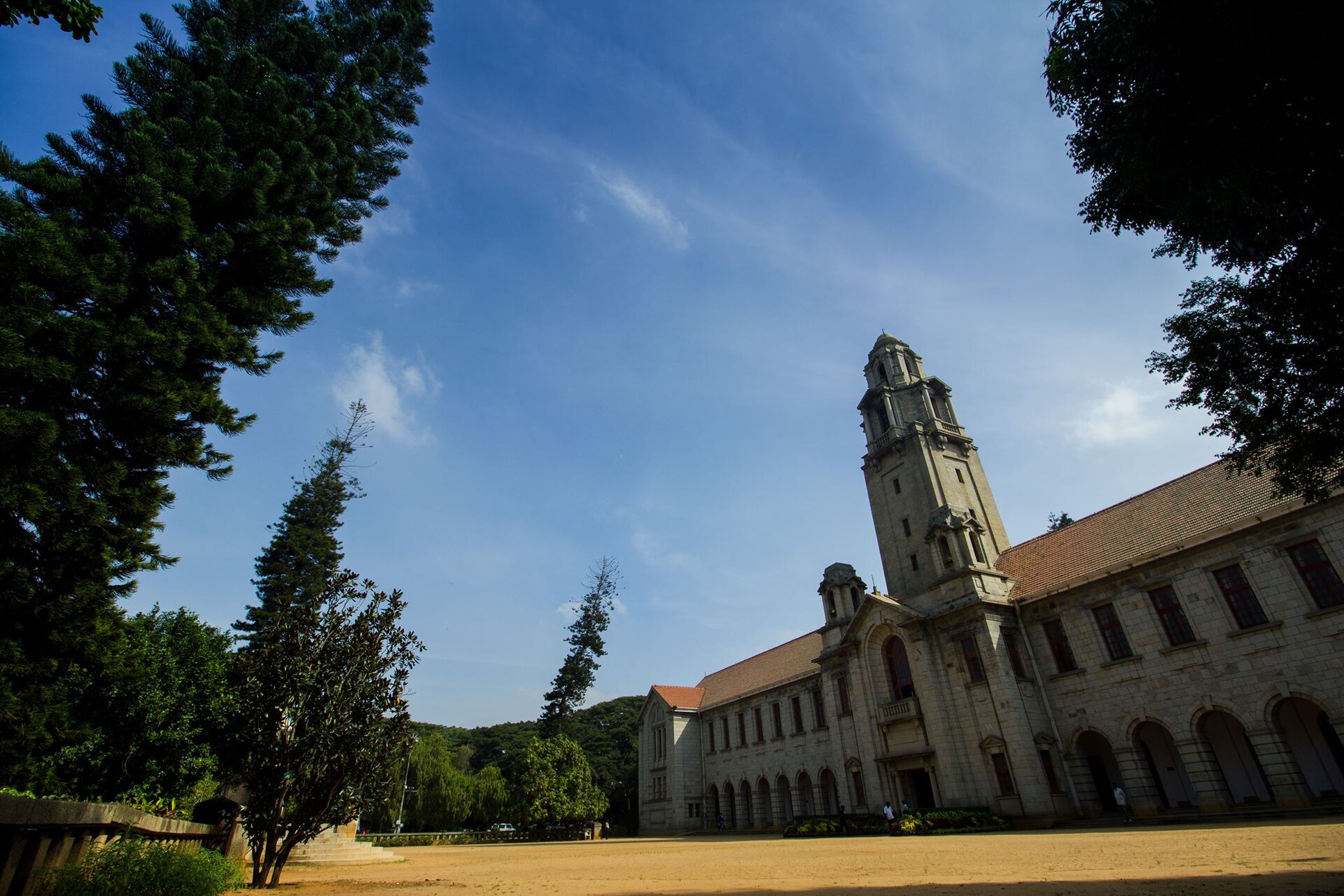
Six years later he went much further. He pledged half his personal wealth to build a research institute. It became the Indian Institute of Science in Bangalore.
Updated in v2
His two sons left their fortunes — and their shares in Tata Sons — to charity.
Tata Sons was incorporated on 8 November 1917 as the family's holding company. The younger son, Sir Ratan Tata, died the following year and left most of his wealth to charity. The Sir Ratan Tata Trust was set up under his will in 1919.
The elder son, , lost his wife Meherbai to leukaemia in 1931 and died the next year. He left everything to the Sir Dorabji Tata Trust, including his shares in Tata Sons and his late wife's jewellery — among it the famous Jubilee Diamond.
Tata's own history says these endowments "today hold two-thirds" of Tata Sons. Today the Sir Dorabji Tata Trust holds about 28% and the Sir Ratan Tata Trust about 23.5% — 51.54% between them — with smaller Tata trusts making up the rest of roughly 66%.
✓Answered: How can a group of charities control one of India's most famous business empires, and why was it built that way?
Updated in v2
It was a set of bequests, not a master plan.
You will often read that the shares went into trusts to stop Tata Sons being split among heirs. Neither son had children, so that is plausible — but none of the sources we found shows it was the intention. Treat it as interpretation.
Timeline
From a fortune to a foundation
JN Tata EndowmentThe first of the Trusts.
Half his wealth pledgedFor what became IISc.
Tata Sons incorporatedThe family holding company.
Sir Ratan Tata TrustUnder his will.
Sir Dorabji Tata TrustHis whole fortune, incl. Tata Sons shares.
What is documented is the outcome: charities became the owners of India's best-known business group. For most of the next century that ownership was quiet. The rules that turned it into control came much later — and they are what the fight is about.
How big was Dorabji's stake?
The Trusts' own history says only "substantial shareholdings". A 2016 Business Standard history says each brother left close to 40% of Tata Sons to his trust; a 2026 essay says the two trusts held about 80% by 1932. Neither figure is confirmed against primary records.
03How a veto was built
Who owns what, who decides what — and why two-thirds of the shares can't simply choose the chairman.
Updated in v2
Tata Sons runs the group. Tata Trusts owns Tata Sons and spends its dividends on causes.
Tata Sons is a . The Supreme Court described it as an investment holding company with a controlling stake in the operating companies and no business of its own. Its standalone assets were about ₹2 lakh crore in March 2026.
Tata Trusts is a cluster of 14 public charitable trusts. No individual owns them: chairs the Trusts but owns none of their shares, which are controlled by each trust's board of trustees. Dividends from Tata Sons flow up to the Trusts and fund their grants.
How it fits together
The owner, the operator, and the two seats in between
Tata Trusts14 charitable trusts · ~66% of Tata Sons (SDTT ~28% + SRTT ~23.5% + others)
Other trustees Neville Tata, Bhaskar Bhat, Jimmy Tata, Jehangir…
↓ Owns ~66% · Art. 121 veto↑ Dividends fund charity
Tata SonsHolding company · six directors, two nominated by the Trusts
Tata group companiesTCS, Tata Steel, Tata Motors, Titan and others
Six directors sit on the Tata Sons board; the Trusts nominate two.
Updated in v2
The veto was written into Tata Sons' rulebook between 2000 and 2014.
The Trusts' power doesn't come from 1932. It comes from clauses added to Tata Sons' much later. and were adopted at the annual meeting of 13 September 2000. The chairman-selection rule, , was amended in December 2012, and in April 2014 the Articles were changed again "to confer affirmative rights" on the Trusts' directors.
Seats. While the Trusts hold at least 40%, the two core trusts acting jointly appoint one-third of the board. Today that is two of six directors: Noel Tata and .
The veto. Article 121 says decisions the board takes by majority also need "the affirmative vote of a majority" of those Trust directors present. In 2021 the Supreme Court rejected the Mistry family's challenge to these rights, calling veto rights for large institutional owners "a global norm".
Updated in v2
The whole fight turns on one sentence of 48 words.
Matters before any meeting of the Board which are required to be decided by a majority of the directors shall require the affirmative vote of a majority of the Directors appointed pursuant to Article 104B present at the meeting and in the case of an equality of votes the Chairman shall have a casting vote.
— Article 121, Tata Sons Articles of Association, as quoted by the Supreme Court in 2021
Read it twice. It sets two tests — a majority of the board, and a majority of the Trusts' directors — and then a tie-break. What it doesn't say is which tie the tie-break is for.
When the Trusts' directors agree, it never matters. As one lawyer put it, the clause assumed they would always agree, so it never said what happens when they don't. On 17 September, for the first time, they didn't.
✓Answered: Was the 17 September reappointment legal? What does Article 121 actually say?
Updated in v2
Two-thirds of the shares still can't simply pick the chairman. Here is why.
The board appoints the chairman, not the shareholders. Under Article 118 a five-member selection committee — three named jointly by the two core trusts, one from the board, one independent — recommends a name, and the board appoints, subject to Article 121.
The Trusts' board power runs through two people. If those two disagree, the owner's voice on the board splits in half.
And the owner itself is frozen. In theory, the Supreme Court noted, the Trusts could use their votes at a shareholders' meeting to "pack the Board". In practice the Sir Ratan Tata Trust has been barred from meeting since May, so Tata Sons couldn't even hold its annual meeting — more on that in chapter 6.
✓Answered: If the Trusts own two-thirds of Tata Sons, why can't they simply pick the chairman?
04The day the veto split
What exactly happened on 17 September — and why both sides believe the law is on theirs.
Updated in v2
How the vote actually went.
Four directors voted for the reappointment: Venu Srinivasan, , Anita George and the chief financial officer, Saurabh Agrawal. Noel Tata voted against. Chandrasekaran recused himself.
That left the Trusts' two directors one against one. Manwani, an independent director who chaired the item, treated them as equally divided and used a casting vote in favour. The company secretary had a legal opinion saying he could.
By the numbers
17 September 2026: the vote
4For: Srinivasan, Manwani, George, Agrawal
1Against: Noel Tata
1–1The Trusts' two nominees
RecusedChandrasekaran
Updated in v2
One earlier question is now settled: Srinivasan voted for.
In October, reports conflicted on whether Srinivasan had voted with Noel Tata or against him. Later reporting, the Trusts' own court filings and the 4–1 count now agree: he voted for the reappointment.
Updated in v2
Both sides read the same 48 words — and reach opposite answers.
DisputedCan a casting vote break a split between the Trusts' directors?Article 121, 17 September: a one-one split between the Trusts' two nominees.
Tata Trusts
No. "Majority amongst two is two and not one." The casting vote only breaks a tie of the whole board; the resolution is void from the start. Backed by former Chief Justice D.Y. Chandrachud.
Tata Sons / Chandrasekaran
Yes. The clause was changed from unanimity to a majority, so a 1–1 split is an "equality of votes" — exactly what the casting vote is for. Backed by Harish Salve and other opinions.
Where it stands: Undecided. Before the Bombay High Court from 27 November 2026.
The Trusts' case. "Majority amongst two is two and not one," they said on 20 September: with two nominees, a majority means both. The casting vote, they argue, only breaks a tie across the whole board, never a split inside the Trusts' bloc — so the resolution was void from the start. They add that Tata Sons defended these very clauses against the Mistrys in the Supreme Court, and that a fresh five-year term is a new appointment that should have gone through the Article 118 committee.
Tata Sons' case. Harish Salve, advising Chandrasekaran, argues the clause once required all the Trusts' directors to agree and was changed to a majority — so a one-one split is exactly the "equality" the casting vote exists for. A legal opinion held by Tata Sons adds that the clause says "Chairman", meaning whoever chairs the meeting. Tata Sons also told Noel Tata that the selection-committee procedure doesn't apply to a sitting chairman.
Updated in v2
Independent lawyers are as divided as the boardroom.
Law professor Umakanth Varottil finds the reading that lets a tie between the two nominees be broken "more convincing" on the text — yet he calls it odd that a third director cast that vote, questions its validity, and thinks the selection-committee process should apply to a reappointment. Both sides can quote him. A Legal500 analysis calls both readings reasonable, and warns that the Trusts' reading would give a single director a personal veto. Commentators at The Leaflet and on K.B.S. Sidhu's newsletter side with the Trusts.
There is one more wrinkle. Indian company law requires a nominee director to act in the company's interest, not as a messenger for whoever appointed him — which makes it harder to say Srinivasan's vote simply "belonged" to the Trusts.
Updated in v2
Now a judge will decide.
The suits were filed on 26 November by the Sir Dorabji Tata Trust and the R.D. Tata Trust — not the Sir Ratan Tata Trust, which is frozen. They name Tata Sons and six directors, including Noel Tata himself as a formal party, and seek damages as well as a declaration that the vote was void.
The first judge assigned, Justice Arif Doctor, recused himself without giving reasons. The case — Trustees of the Sir Dorabji Tata Trust vs Tata Sons — was mentioned before Justice Abhay Ahuja for a hearing on 27 November.
Even the decision to sue was split: Noel Tata, his son Neville and Bhaskar Bhat voted for it; Srinivasan and Vijay Singh voted against, and have asked the to look into it.
How much in damages?
Reports differ. LiveLaw, reading the filed suits, reports ₹50 crore sought by one trust and ₹15 crore by the other, each with 18% annual interest. Business Standard, reading the draft trustee resolution, reported ₹65 crore sought "from each director" — the same total as LiveLaw's two figures combined, so possibly a misreading. We could not verify it.
✓Answered: How does this end, and which dates should I watch?
05A regulator's deadline
How a banking rule can force a salt-to-software group onto the stock market — and what a listing would change.
Updated in v2
To the central bank, Tata Sons is a finance company — and big finance companies must list.
Tata Sons is registered with the as a , a kind of non-bank finance company. In October 2021 the RBI sorted such companies into layers by size and set one blunt rule for the top layer: they "shall be mandatorily listed within 3 years".
On 30 September 2022 the RBI named Tata Sons among 16 companies. The clock ran to 30 September 2025. Under a simpler 2026 test — assets of ₹1 lakh crore or more — Tata Sons, with about ₹2 lakh crore, still qualifies, and Business Today reports it is the only unlisted company left on the list.
✓Answered: How can a banking regulator force a salt-to-software group onto the stock market?
Updated in v2
Tata Sons tried to step out of the category. The RBI closed the door.
Timeline
The road to a listing demand
The ruleTop-layer firms must list within 3 years.
Tata Sons namedOne of 16 upper-layer firms.
Asks to leaveRepays ₹21,813 cr of debt.
Deadline passesNo listing.
RBI says noSurrender rejected.
In writing"Including the requirement of listing".
In 2023–24 Tata Sons repaid ₹21,813 crore of debt and asked to surrender its registration. The deadline passed. On 11 September 2026 the RBI rejected the application — the same day it cancelled the registration of another company, part of about a dozen such cancellations this year. Then, in a letter of 16 November, it told Tata Sons to comply "including the requirement of listing by your company" — the first time that demand was put explicitly in writing.
Not everyone thinks the rule must bite. Corporate lawyer Nitin Potdar points out that government-owned companies in the same layer are exempt from listing, so listing can't be essential to safety.
Updated in v2
The Trusts' way out: change what Tata Sons is, so the rule no longer fits.
On 28 September the Trusts proposed folding two operating companies — Tata Electronics Systems Solutions and Tata Consulting Engineers — into Tata Sons. On the Trusts' figures, operating revenue would become 64.3% of its income and group investments would fall below 90% of net assets, so it would no longer be a finance company at all.
It needs the RBI's blessing, and under the RBI's rules, as the law firm S&R Associates reads them, an upper-layer company stays under the tougher rules for at least five years even if it later stops qualifying. Noel Tata has also urged Tata Sons to ask for time until September 2029.
Updated in v2
What a listing would actually change.
Side by side
Private today vs. listed tomorrow
Private (today)
Listed
Trusts' stake
~66%
~66% at first (diluted as public float grows)
Board seats & veto
Permanent, in the Articles
Re-approved by 75% every 5 years (Reg. 31B)
Selling shares
Board can restrict transfers
Traded on the exchange
Public float
None
At least 2.5% offered at listing → 15% in 5 yrs → 25% in 10
Price of the stake
No official valuation
Set daily by the market
For the Trusts' control. They would keep their roughly 66% and its votes. But in a listed company, special rights like board seats and a veto fall under SEBI's : shareholders must re-approve them by at least every five years. A special resolution needs 75% of votes cast, so the Trusts could not carry it alone. A permanent veto becomes one that must be won again.
Before any of that, Tata Sons would have to convert back from a private to a public company — also by special resolution, which the Trusts' 66% can block on its own.
For ordinary investors. Rules eased in 2025–26 let very large companies list with a smaller first offering — at least 2.5% of their shares — and reach 15% public ownership within five years and 25% within ten.
✓Answered: What would a listing actually change for the Tata companies, ordinary shareholders and the charity work?
Updated in v2
And for the charity work? That is the argument nobody can yet settle with numbers.
Noel Tata argues a listed Tata Sons would answer to "institutional and foreign shareholders whose legitimate interest is financial return", would change the group's long-term investment and social model, and would weaken Tata Sons' role as a backstop for group companies in trouble.
Supporters say listing brings transparency. , a trustee, says it would "dismantle the pervasive culture of secrecy".
06Who speaks for the owner
How the Trusts went from one voice under Ratan Tata to open war among themselves.
Updated in v2
It began with a death: Ratan Tata's, on 9 October 2024.
Two days after died, the trustees unanimously chose his half-brother Noel as chairman of the Trusts. In November Noel joined the Tata Sons board as a nominee.
Business Standard's reading is that Noel "did not inherit Ratan Tata's unquestioned authority" — and that what followed was the breakdown of an informal consensus that had held the Tata system together. That is analysis, but the events bear it out.
✓Answered: What did Ratan Tata's death change?
Updated in v2
In 2025 the trustees fought over seats — and Noel won.
Timeline
How the owner came apart
2024
Ratan Tata diesNoel chosen chairman two days later.
2025
One voiceTrusts oppose listing, back a third term.
Singh blockedFour trustees stop his board renewal.
Mehli Mistry outVoted out by Noel, Srinivasan, Singh.
2026
Noel turnsWithdraws support for a third term.
Trust frozenSir Ratan Tata Trust can't meet.
AGM failsNo quorum — a first.
The vote4–1, by casting vote.
Allies turnSrinivasan, Singh go to the regulator.
Khambata leaves"A day that will live in infamy".
To courtTwo trusts sue Tata Sons.
In September 2025 four trustees — , Pramit Jhaveri, and Jehangir H.C. Jehangir — blocked from continuing on the Tata Sons board. Noel and Srinivasan had backed him. A month later Noel, Srinivasan and Singh voted Mehli Mistry out of the Trusts. In July that year the Trusts had unanimously opposed a listing — and backed a third term for Chandrasekaran.
Updated in v2
Then the regulator froze half the owner.
A 2025 Maharashtra law caps at a quarter of a trust's board. The Sir Ratan Tata Trust has six trustees, three of them for life. In May 2026 the Charity Commissioner ordered an inquiry and restricted the trust, which has been unable to meet since 15 May. The Trusts say the law only applies going forward and that the order was made .
The knock-on effect was remarkable. Tata Sons' shareholder meetings need a representative named jointly by both big trusts. On 18 August, for the first time in its history, Tata Sons' annual meeting was adjourned for lack of a quorum.
Updated in v2
In 2026, Noel's allies became his opponents.
In February Noel withdrew his support for Chandrasekaran's third term, citing the performance of Air India and Tata Digital. After 17 September, Srinivasan and Singh publicly backed listing, and in late September asked the Charity Commissioner to investigate Noel — including his status as a permanent trustee and his son Neville's appointment — and to bar him from voting the Trusts' shares.
Noel lost an ally, too: Khambata left in November, calling 17 September "a day that will live in infamy". And Jimmy Tata accuses Noel of a "back-door takeover" of Tata Sons.
DisputedInside the owner: who stands whereListing and the chairman's third term
Against · Noel's side
Noel Tata, Neville Tata, Bhaskar Bhat. (Darius Khambata, until he left.) Controls the Sir Dorabji Tata Trust 3–2.
For · the board majority
Venu Srinivasan, Vijay Singh, and reportedly Jimmy Tata — with Chandrasekaran, the Tata Sons board majority and the SP Group.
Where it stands: The Sir Ratan Tata Trust, the other big holder, is frozen by the Charity Commissioner.
"Isolated" is only half right. On the Tata Sons board he is outvoted. But at the Sir Dorabji Tata Trust — the largest shareholder — Noel, Neville Tata and Bhaskar Bhat outvote Srinivasan and Singh three to two. That is why it was that trust, not the frozen Sir Ratan Tata Trust, that went to court.
Noel's counter-attack
In a letter of 20 November Noel questioned the minutes of the 17 September meeting, demanded the recordings, and raised a possible conflict of interest involving Srinivasan's company and a firm linked to Chandrasekaran's family. Tata Sons denied any conflict.
✓Answered: Why is Noel Tata isolated inside the very Trusts he chairs?
07The Mistry stake
What the Shapoorji Pallonji family wants, why it needs it now, and what its 18% might be worth.
Updated in v2
The biggest outside owner has been there since 1965 — and has been trying to leave for a decade.
The holds about 18.4% of Tata Sons through two companies, Sterling Investment and Cyrus Investments. It first bought in in 1965.
Relations broke when was removed as Tata Sons chairman in October 2016; the Supreme Court upheld the removal in 2021. Cyrus died in a road accident in 2022, and his elder brother runs the group. The families are entwined: Noel Tata's wife, Aloo, is Shapoor's sister.
Leaving is hard. As a private company, Tata Sons can restrict who its shares are sold to — and the whole stake is pledged to lenders.
✓Answered: What does the Mistry family want, and what is its 18% worth?
Updated in v2
SP says listing is a moral cause. What it needs is cash, fast.
Shapoor Mistry welcomed the RBI's decision "wholeheartedly" and called a listing "a social and moral imperative" that could be "a bridge" between shareholders and the Trusts. Documents obtained under the Right to Information Act show he twice wrote to Prime Minister Modi; in 2025 he accused the Trusts of holding Tata Sons "hostage for power and personal interest".
Behind the principle is debt of around ₹60,000 crore. In July SP closed a ₹21,500 crore refinancing secured on its Tata Sons shares — and agreed to sell part of the stake within 18 months. Its ask now is a : Tata Sons buying back enough of SP's shares to raise at least ₹25,000 crore, paid over 18 months, for debt repayment only.
Tata Sons is reported to be weighing three routes: a Tata company buying part of the stake, a buyback open to all shareholders, or the selective reduction. The last two could raise the Trusts' share for the first time in three decades.
Updated in v2
What is 18% of Tata Sons worth? Nobody official has ever said.
Chart
What is the Mistry family's 18% worth? Four estimates
Implied by the ₹25,000 cr offer (our calculation)1.5 lakh cr
Listed holdings only2.19 lakh cr
ET look-through2.3 lakh cr
Sum of the parts3 lakh cr
No official valuation exists. ₹ lakh crore.
Tata Sons has never been independently valued. Estimates of the Mistry stake run from about ₹1.5 lakh crore — our own calculation from the ₹8.3 trillion valuation of Tata Sons implied by the ₹25,000 crore offer — to about ₹3 lakh crore on a sum of the parts. In 2020 the two sides were even further apart: SP claimed more than ₹1.75 lakh crore; Tata's lawyers said up to ₹80,000 crore.
08What it's really about
Listing or control? The theories, the counter-arguments — and the dates that will settle it.
Updated in v2
Is this about listing, or about who controls Tata after 2027? Both — they are the same fight.
A listing would require amending the Articles, and Business Standard reported it "is likely to do away with most such veto powers". So the regulatory question and the boardroom question are one question: do the Trusts remain the group's guardians, with a veto, or become its biggest shareholder in a listed company?
That is why the same 17 September meeting did both things at once — moved towards listing and reappointed the chairman — and why the owner is fighting both. Outlook Business called the chairman's vote "only one part of the larger contest for control".
✓Answered: Is this really about listing, or about who controls Tata after February 2027?
Updated in v2
Five readings of the rift — and the case against each.
Readings
Five readings of the rift
1Argued
Stewardship
The caseA private Tata Sons protects the endowment and the dividends that fund grants. "The Trusts do not run Tata Sons and do not seek to."
The counterCritics, including some trustees, call it control without the accountability a listing would bring.
2Reported
Family consolidation
The caseJimmy Tata accuses Noel of seeking a "back-door takeover" of Tata Sons through the Trusts.
The counterNoel's side frames every move as defending rules Tata Sons itself defended in the Supreme Court.
3Reported
SP's liquidity
The caseThe Mistry family needs about ₹25,000 crore soon; a listing or buyback is its way out.
The counterIt is also a minority owner that has had no exit for a decade — a real grievance, not just a cash need.
4Argued
The Articles
The caseJimmy Tata blames the "drastic alteration" of the Articles in 2013–14 for concentrating power in the Trusts.
The counterThe Supreme Court upheld those Articles in 2021 as a global norm for institutional owners.
5Reported
A government hand
The caseAmit Shah and Nirmala Sitharaman reportedly urged a settlement in 2025; Shapoor Mistry wrote to the Prime Minister twice.
The counterNothing public shows the government steering the outcome; the letters were simply forwarded to the RBI.
Argued by participants or commentators. None is established fact.
Updated in v2
The story isn't over. These dates will decide how it ends.
Timeline
Dates to watch
First hearingBombay High Court, Justice Abhay Ahuja.
Tata Sons boardListing first on the agenda; an EGM proposed.
AGM noticeLast day to call an AGM by year-end (analyst estimate).
AGM deadlineThen a shareholder could go to the NCLT.
Term endsChandrasekaran's current term.
Between them, a court that must read 48 words, a regulator that wants a listing, a family that needs cash, and an owner divided against itself. Both camps say they are protecting the founders' legacy. Which of them gets to define it is what the next three months will decide.
You made it
What you now know
The 10 questions this story set out to answer, in one line each.
How can a group of charities control one of India's most famous business empires, and why was it built that way?
Jamsetji Tata's sons left their fortunes, including their Tata Sons shares, to charitable trusts; today the Trusts own about 66%. Their control comes from clauses written into Tata Sons' rules between 2000 and 2014.
If the Trusts own two-thirds of Tata Sons, why can't they simply pick the chairman?
The board, not the shareholders, appoints the chairman, and the Trusts' board power runs through just two nominee directors, who split on 17 September. Their shareholder route is blocked too: one trust is frozen.
How can a banking regulator force a salt-to-software group onto the stock market?
The RBI regulates Tata Sons as a large finance company, and its rules say such companies must list within three years. It refused Tata Sons' request to leave the category and, on 16 November, put the listing demand in writing.
Was the 17 September reappointment legal? What does Article 121 actually say?
No court has ruled. The Trusts say a casting vote can't override a split between their two nominees; Tata Sons says that is exactly what the tie-break is for. Independent lawyers are divided, and the Bombay High Court now has the case.
Why is Noel Tata isolated inside the very Trusts he chairs?
His 2025 allies, Srinivasan and Singh, turned against him in 2026 over the reappointment and listing. He is outvoted on the Tata Sons board but still controls the Sir Dorabji Tata Trust 3–2.
What does the Mistry family want, and what is its 18% worth?
The Mistry family's group owns about 18.4%, pledged to lenders against debt of around ₹60,000 crore. It backs listing in principle but wants about ₹25,000 crore soon. Estimates of the stake's value range from about ₹1.5 to ₹3 lakh crore.
What would a listing actually change for the Tata companies, ordinary shareholders and the charity work?
The Trusts would keep about 66%, but their board seats and veto would need re-approval by 75% of votes every five years, and Tata Sons would have to become a public company first. Its effect on charity funding is argued, not measured.
His death in October 2024 removed the one authority that held the trustees and Tata Sons together; the informal consensus broke down into fights over seats, the chairman and listing.
How does this end, and which dates should I watch?
It's unresolved. Watch the High Court, the 30 November board meeting, the 31 December AGM deadline, and 20 February 2027, when Chandrasekaran's current term ends.
What this story could not settle, and why. Each item is something not known yet, a claim we couldn't confirm, something nobody publishes, or something we checked and left out.
Claimed, not confirmedNo official figureLeft out
Not known yet 4 things can't be known until they happen. They're in What to watch next, just below; the story updates when they land.
Claimed, not confirmedattributed in the text and marked unconfirmed
Business Standard's report of ₹65 crore in damages from each director
Business Standard, reading the draft trustee resolution, reported ₹65 crore sought from each director. Its pages blocked automated reading and we found no other copy; ₹65 crore is also the total of the two filed figures, so it may be a misreading.
What we could confirm: LiveLaw, reading the filed suits: ₹50 crore sought by the Sir Dorabji Tata Trust and ₹15 crore by the R.D. Tata Trust, each with 18% annual interest.
Tata Sons has never been independently valued, and no official figure exists. We also found no reliable estimate of what Tata Sons would be worth in a listing, or how much of it would be sold.
What we could confirm: Published estimates of the stake run from about ₹1.5 lakh crore (implied by the ₹25,000 crore offer) to about ₹3 lakh crore (sum of the parts). Higher whole-company figures online come from a secondary aggregator and are not used.
How much of the Trusts' charity spending depends on Tata Sons dividends
We found no reliable figure for it, nor for the effect a listing would have on the listed Tata companies. Both sides argue from principle, not published numbers.
What we could confirm: The Trusts say Tata Sons dividends flow up to them and fund their charitable work.
How big a share of Tata Sons each brother left to charity
The Trusts' own history says only "substantial shareholdings". The figures in circulation (close to 40% each, or about 80% for the two trusts by 1932) come from secondary histories that we could not check against primary records.
What we could confirm: Today the Trusts hold about 66%, with 51.54% in the two biggest trusts.
Whether the bequests were meant to keep Tata Sons in one piece
It is often said, and plausible since neither son had children, but none of the sources we found records it as the intention. The story treats it as interpretation.
The current text of Tata Sons' Articles of Association
Neither side has published the current Articles. The wording of Article 121 in this story is as quoted by the Supreme Court in 2021; we could not confirm whether it has been amended since.
A report that Chandrasekaran's own vote decided the 17 September result
Business Today reported this on 17 September, but the filed suits and other reports say he recused himself and that Harish Manwani, chairing the item, cast the deciding vote, so we follow those.
When any of these closes, we publish a new version and mark exactly what changed.
What to watch next
First Bombay High Court hearing
Will the court stop the casting vote being used again on 30 November?
Tata Sons board meeting
Listing is the first agenda item; an EGM is proposed.
Deadline for Tata Sons' annual meeting
If it can't be held, a shareholder could go to the NCLT.
The Charity Commissioner's findings on the Sir Ratan Tata Trust
Decides whether the frozen trust can act again.
Chandrasekaran's current term ends
The hard deadline for the succession question.
Was this worth your time?
Tell us, and see what other readers said.
Follow this story
Get an email when this story changes. Nothing else.
How this story was made
Carefully crafted by people and AI. AI agents search widely, read the sources and draft the story; a person chooses the subject, shapes and edits it, and decides when it's ready to publish. Every source is listed below, with what was read in full and what we couldn't settle.
Where the facts come from. Court filings, the Supreme Court's 2021 judgment, RBI documents, company statements and news reports.
How this version was built. It was researched on the ten reader questions at the top of the story.
What we couldn't open. Several Business Standard and ANI pages blocked automated reading. Where possible the same report was read through a syndicated copy or the primary document.
v2 · 26 Nov 2026 — Rewritten to answer ten reader questions, updated to 26 November: the court case, the RBI's written listing demand, the Mistry stake, what a listing would change.
correctedThe vote count is now established as 4–1, with Srinivasan voting in favour.
correctedDorabji's "40%" is a secondary figure; the 'kept the group whole' motive is labelled interpretation.
addedThe text of Article 121 and why it is ambiguous.
addedThe Bombay High Court suits of 26 November.
addedWhat a listing would change for the Trusts, investors and the charity work.
addedThe Mistry family's debt, its ₹25,000 crore ask, and estimates of the stake's value.
addedHow a charity-law change froze one trust and stopped Tata Sons' AGM.
removedThe standalone 'who is who' section: people now appear as margin cards beside the text.
correctedSeven details tightened: listing-offer size, the Mistry debt figure, how the stake value is derived, the 30 Nov agenda wording, Dorabji's bequest, the trusts' stakes, and how Varottil is characterised.
v1 · 7 Oct 2026 — First edition, imported from the original PDF and restructured as a narrated story.Read v1